Comments
Header
News from Shin Kaze
November 2026
Shin Kaze Aikido Alliance is an organization dedicated to the practice and development of
Aikido. It aims to provide technical and administrative guidance to Aikido practitioners and
to maintain standards of practice and instruction within an egalitarian and tolerant structure.
|
|
Conten
Intro
Introduction

Welcome to the November 2026 edition of the Shin Kaze Aikido Alliance Newsletter!
This edition gathers a vibrant collection of insights, organizational news, and personal achievements
from members of our global alliance. The contributors examine the perpetual nature of training and the
posture of lifelong learning, the personal evolution and elevated accountability that accompany reaching
Shodan, and how core principles like ukemi and musubi foster inner resilience, mental adaptability, and
constructive dialogue both on the tatami and in everyday life. Readers will also discover Zen-inspired
poetic reflections, innovative uses of artificial intelligence to support Iaido practice in Cuba, insights
on guiding young martial artists, and the deep alignment between traditional painting and Aikido discipline
at Dojo Himawari in Peru. Additionally, this edition features technical wisdom from Kanai Sensei on the true
essence of Budo, lighthearted dojo humor, and organizational updates welcoming our newest provisional member
dojos and celebrating recent yudansha promotions.
This publication offers a shared space for practitioners around the world to record their growth, examine
core concepts, and offer fresh perspectives. Though miles may separate our physical training spaces, these
contributions close the distance, giving us a way to share insights and inspire one another's practice.
We hope these pages offer renewed inspiration and deepen your connection to our international family.
We warmly welcome your voice in future issues; your personal experiences and insights are what keep our shared
community vibrant.
|
|
Art. 2
A beginning without end
By Juan José A. Maders
Sandan, Kokoro Dojo, Córdoba, Argentina
Back in October 2010, at the age of 44, marked the beginning of one of the most wonderful activities I ever started and continue to practice to this day: AIKIDO. Since I was a child, I was always passionate about martial arts, for which the only source of inspiration was the movies we used to watch on television and in theaters. Passionate about virtually all sports, the one I practiced most regularly was soccer; at age 10 I started Karate-Do, but the experience was not what I expected and turned out to be a big disappointment. The truth is I don't know what I expected from it—probably, being so young, I assumed that after just a few classes I could acquire a certain "mastery."
It was in 1988 when I saw an actor for the first time in an action movie (without knowing he was a master) performing precise movements, conspicuously without using force, throwing and controlling his attackers. The movie was "Nico" (Above the Law), starring Steven Seagal. I was stunned and amazed to discover, almost by accident, this beautiful art that has marked my life forever.
Many years passed from that moment until I finally decided to "try" Aikido. Searching the internet for a school in the city of Córdoba, Argentina, where I am originally from, I got in touch with the person who remains my teacher today, Sensei Daniel Eduardo Medina, of the Kokoro Dojo Martial Arts Center.
Like any beginning, perseverance and fear of the unknown were always present; however, from the very first class I knew it was the martial art I was looking for.
From then on, learning under the guidance of my teacher and several senpais brought about a profound change in me over time, shaping how I approach life from a new perspective. Although my intention was only to learn the art and never to "wear" a black belt around my waist, today, with great responsibility, humility, and honor, I wear the famous hakama of aikidokas.
Just learn and that's it? That is the idea one has at the beginning, but once you enter this practice, you realize that you will always be gaining knowledge of new techniques and philosophical concepts that take you far beyond what you initially imagined. Always keeping a beginner's mind (Shoshin). This is one of the most important conditions for understanding what this path is all about, at least from my humble point of view.
I cannot overlook what it means to me to practice weapons techniques with the Jo and the Bokken, the latter being my favorite. Once you begin to practice consistently, you make the surprising discovery of how necessary it is, transferring the "movements" performed to open-handed Aikido.
Today at 60 years of age, I never cease to be amazed in every practice session with my teacher and fellow students. From each of them I always draw knowledge, and I realize how far I still am from that "mastery" I sought in my childhood.
|
|
Art. 3
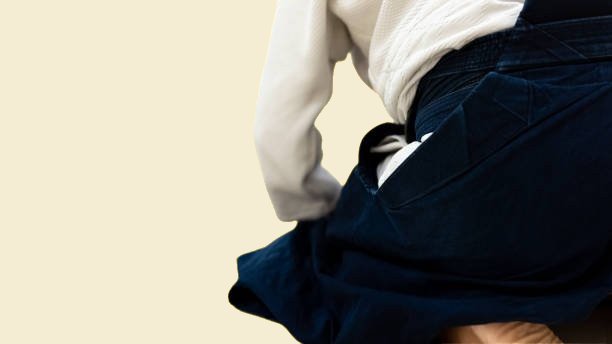
The superpowers hakama - My experience as a new Shodan
By Marlon D. Castillo
Shodan, Escuela Nacional de Aikido Zen Bu Dojo Aikikai, Caracas, Venezuela
For many years of practice, I observed the hakama from the other side of the tatami.
I saw it on my Sensei and on senior training partners as a natural part of the image of Aikido. Naturally, I knew that one day, if I continued along this path, the time would come when I would wear it. However, imagining that moment and living it are two very different things.
Upon reaching the rank of Shodan and putting on the hakama for the first time, I experienced a feeling that is still difficult for me to explain. There is something different, an energy.
A mix of satisfaction, excitement, respect, and responsibility. It is as if, while adjusting each fold and finishing tying it, one comes into contact with a certain mystique that has always been present in the dojo, but is now perceived from another perspective.
That is where my own half-serious, half-joking name for it was born: the superpowers hakama.
Because I must admit that when you put it on for the first time, something changes in how you feel on the tatami.
But I quickly realized something important: the hakama doesn't actually grant any special powers, it doesn't make techniques magically appear, it doesn't correct our mistakes, it doesn't automatically turn us into better aikidoka—and it certainly doesn't mean we have finished learning.
Paradoxically, for me it has meant the exact opposite. Reaching Shodan has made me more aware of everything I still have to learn.
During previous years, the goal seemed to be up ahead: advance technically, pass evaluations, understand movements, and one day earn the black belt. But when you finally arrive there, you discover that what seemed like a finish line was actually another doorway.
Shodan means first rank. And I understand the importance of that word better every day: first, it is merely the beginning of a new stage. I have also come to realize that wearing a hakama brings a responsibility that goes far beyond technique.
When a new practitioner steps into the dojo and observes those wearing a hakama, they inevitably look to them as a reference. They observe how they practice, how they treat their partners, how they receive corrections, and how they conduct themselves both on and off the tatami.
That forces you to ask yourself a very simple question: what kind of example am I setting? Perhaps that is where the famous superpowers truly lie. Not in being able to throw harder or execute a spectacular technique, but in developing far more difficult abilities. The power to master our ego, the power to stay calm, the power to respect a partner regardless of their rank, the power to accept correction, the power to acknowledge that we still do not know, and the power to fall and rise back up again. And perhaps one of the most important: the power to help others walk the same path that someone once helped us begin.
Today, when I put on my hakama, I still feel that hard-to-define energy. The mystique is still there. But now I also feel its symbolic weight. Not as a burden, but as a reminder. It reminds me of my teachers, my training partners, all the shared hours on the tatami, the falls, the corrections, the times a technique simply didn't work and had to be tried again—and above all, it reminds me that the black belt does not represent the end of the path.
Today I am beginning to understand that being a Shodan does not mean being able to say "I have learned Aikido." It means being able to say: "Now I am ready to truly begin studying it." Perhaps, after all, the hakama does have superpowers—just understood in a different way.
|
|
Art. 4
To fall and to err is to grow to succeed
By F. Johnymar Castro
Escuela Nacional de Aikido Zen Bu Dojo Aikikai, Caracas, Venezuela
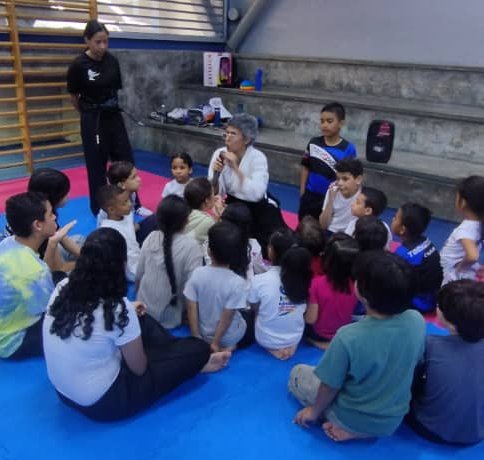
Nowadays there are many ways of living, among technology, science, networks, nature, and society. Of these, I put several options into practice, but I complement them with my training time in martial arts—an activity that allows me to measure my behavioral and physical errors and progress. Aikido is one of them, providing the setting to share with the children of the Vertical Taekwondo school during their holiday camp.
E.N.A ZEN BU DOJO is part of the martial community at the Centro Deportivo Vertical de Chacao; thus begins "Falling and making mistakes is growing to succeed," a talk originally titled "Holographic Mind and the Frequency Field." From synapse to quantum vacuum—a process I currently work on at a complementary health level—I presented it upon request to participate, and once approved, I was thrilled to share these ideas on the mind and brain functions. However, when they gave me the news about my audience, I laughed, because I had to transform the complexity of the initial presentation into the simplicity of experiential terms.
Since they were linked to martial arts activity, I redirected the focus toward the foundations of Aikido—specifically falls and projections as an optimal medium and source for neurocognitive flexibility. Promoting the jump across frequencies, from attention to relaxation based on environmental demand, was a challenge of both practice and science. In Venezuela, martial arts have an educational and athletic presence, a refined pleasure for curious minds and daring spirits. This leads us to a varied and select public, finding competitive and federated disciplines with a larger attendance of children and youth, and non-competitive, process-oriented disciplines practiced by contemporary adults and seniors with years of experience.
Articulating the experience of both worlds was an opportunity to build bridges of tradition between the daily practices of martial arts clubs. It was enriching to share with a group open to exploring new paths of learning and willing to listen to another discipline to experience a way of falling and see the work of this art (Aikido). Internally, it was gratifying to see the unity of all the ENA members taking the time to exchange experiences with this young group.
The talk turned into body-based motivation, resulting from joining our collective intelligence. Fukushidoin Sensei Guillermo Ruiz pedagogically shared the physics of rigidity vs. wave through the practice of ukemi, while I explained the value of tension, body dynamics when falling, and the material physics of circularity—engaging our team to guide the children's movement exploration during the first twenty minutes.
Next, we began reprogramming learned or experienced errors through the vagus nerve—an expression of the body's extraordinary response capabilities when facing obstacles, shown in natural impulses of involuntary regulatory functions (e.g., airway regulation, physical calm, among others). To ensure smooth understanding, we continued with ukemi over obstacles, blending fun with body exploration and natural responses for another twenty minutes. The last two blocks were ten minutes each: the first focused on projections and force reorientation led by Sensei Ruiz alongside Shodan Alonso la Cruz and Marlon Castillo, demonstrating the usefulness of falls for defensive responses and attacks. The final ten minutes, under my responsibility, integrated the vacuum through calm and meditation on the tatami to lower excitation levels and consolidate what was experienced.
By the end, both children and adults felt the worth of that powerful inner presence that makes us heroes. For my part, I was happy to show something beyond mere technique: the human capacity for transformation through experiencing the simplicity of a complex, ancient culture.
Aikido is a language of change and transformation with as many possibilities as practitioners who join it. Although disparity is a part of life, consistency of thought and action enables the alignment of values and practical means.
Time gives you the key, which is measured in growth through overcome falls and errors, as we emerge victorious over our fears and limitations.
|
|
Art. 5
Musubi and Communication: Reflections
By Luis Felipe Villaroel
Dojo-cho, Isshin Kai Aikido Dojo, Isla de Margarita, Venezuela
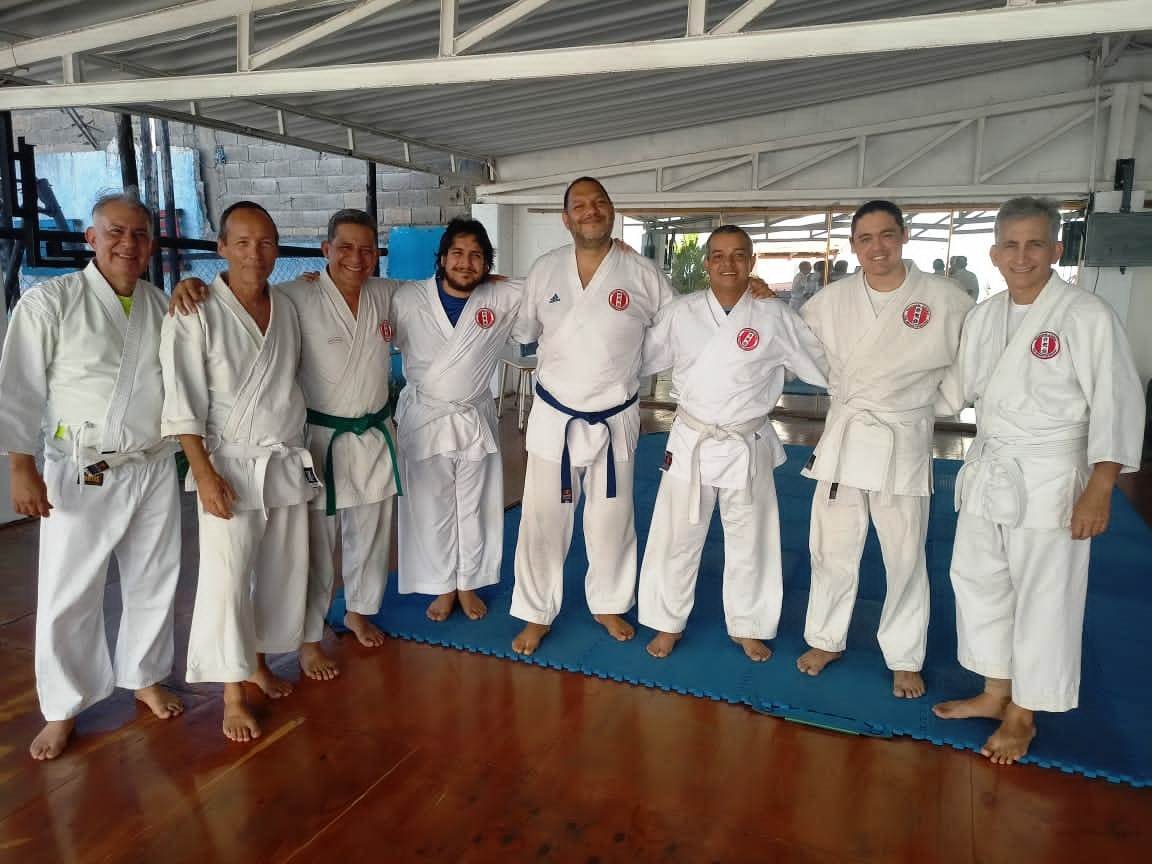
It is said that the existence of something or someone depends on us naming it verbally. It is a simple yet interesting idea at the same time. I read an example from a specialist who said: "If a wife loses her husband, she is a widow; but if a mother loses a child, what would we call her?". Does she perhaps not exist because she is not named? I know that you, who are reading this, will ask yourselves the same question.
Now then, what does this have to do with Aikido? A great deal, I would say, if we talk about the power of the word, conflict resolution, and how we relate to one another. Techniques or behaviors are often spoken of and thought about, but little reflection is given to the power of words and how to bring this into our Dojo or even into our family life.
As Aikido practitioners, the mere fact of knowing the term "Musubi" should mark a before and after in our lives. In this regard, I share several questions for reflection: Do we think of Musubi only when executing a technique? Do we put it into practice only in the Dojo or throughout our daily lives? If a student asks their teacher a question, does the answer possess the Musubi required to understand the root of the question? Or if a training partner has a certain difference in practice, have we stopped to think about how we can communicate to understand what the other person thinks? Let us bring this into the family sphere: as Aikido practitioners, regardless of rank, do we truly create "Musubi" when managing differences among family members or friends? To be honest, I have my doubts, but each person knows their own answer.
Every day that I read and study Aikido, I imagine what our master O-Sensei had in mind, and I tell myself: every day brings new learning. His legacy is deeper than a technique and goes far beyond the reach of words. The challenge for all of us Aikido practitioners, and for those who kindly read these lines, is to consider the term "Musubi" in our relationship with the world, to savor it, and to make it part of our being. One learns a great deal from what we already know when we finally put it into practice.
___
Editor's Note:
In Japanese spirituality, musubi (結び) is the creative force of connection and union. Although literally translated as "to tie," it defines the idea that nothing in the universe exists in isolation. It is the invisible thread that connects people, nature, the divine, and time itself. From Shinto rites to personal relationships, musubi reminds us that living is, in essence, continuously weaving relationships and interconnections.
|
|
Art. 6
Zen of the Dojo
By John Shin
Triangle Aikido, Durham, North Carolina, USA
Our Dojo is situated in an industrial park.
It is adorned by a single sign,
nothing ornate but with clean lines.
As I open the door to the Dojo,
I lower my head in respect,
before turning towards the dressing room.
I change out of my clothes,
transform when I tie off my Gi,
and make my way onto the mat.
The Sensei bows down,
recognizing our predecessors,
and those around us.
The class bows back in unison,
showing gratitude for the art,
we are about to engage in.
All of us proceed,
with our opening warmup exercises,
to prepare our minds and bodies.
The teacher points to an acolyte,
create a circle of instruction
for all of us to join.
My partner and I,
try to weave a connection,
with each other.
In briefest of moments,
our movements are totally in sync.
A dance in harmony.
As we strike and attach in silence,
falling into a song that aligns our souls,
to the rhythm of the universe.
The session ends as soon as it begins.
A time separate from our plane of reality,
as we wind down.
I change back to my everyday wear,
with one final nod,
I exit the Dojo in tranquility.
|
|
Art. 7
Artificial Intelligence, an alternative for the development of Iaido in Cuba Kan Sho Ryu
Por Leonel Sánchez Sotolongo Fukushidoin
Dojo-cho Kan Sho Ryu Dojo, Cuba
After my foray into using Artificial Intelligence (AI), I have received some criticism, mainly from people who, based on their limited experience with these tools, consider that they may pose a threat to the intellectual development and performance of human beings. I have always seen this type of reaction as a form of resistance to change, something that usually accompanies the emergence of new technologies.
However, I believe that the problem lies not in the tool, but in how we use it. A knife can be used to commit violence or to chop vegetables and promote healthy eating. Everything depends on the hands that wield it and the purpose for which it is used. The same happens with AI. It can be used to create disinformation campaigns and deceive thousands of people, but also as a support tool in fields as important as medicine. Therefore, the debate should focus on why and how we decide to use it.
AI and Martial Arts in Cuba
In the realm of martial arts, and specifically in Cuba, I believe we still take very little advantage of its possibilities. In many cases, its use is limited to creating high-grade certificates—most without the endorsement of recognized international federations, which is questionable—or making posters to announce events for different martial disciplines in the country.
But why not put it to a more beneficial use?
For years, Cuba has been going through a complex economic situation that also makes access to international technical guidance difficult. It is not always possible to bring in foreign instructors to teach seminars, nor to travel regularly abroad to receive their teachings. This reality forces us to look for alternatives that allow us to continue learning and developing.
Our Experience
Kan Sho Ryu Dojo has spent years working on the development of Aikikai Aikido in Villa Clara province and, progressively, in other regions of the country, following the foundation in 2021 of the Aikido Cuba Kan Sho Ryu organization.
Along this path, we have had the privilege of hosting instructors in our province from the Shin Kaze Aikido Alliance, an organization of which we have been members for five years. Its president, Robert Zimmermann Shihan, has taught seminars in Santa Clara for three consecutive years. These experiences have allowed us to confirm the enormous value of in-person teaching and direct feedback from an experienced instructor.
A short time ago, we also decided to begin practicing Iaido, a discipline in which our guidance is much more limited. We have never attended an in-person seminar. Our learning has been based primarily on videos and occasional suggestions from national and international instructors received via WhatsApp. It is here that AI has begun to offer us an interesting alternative.
How Has AI Helped Us?
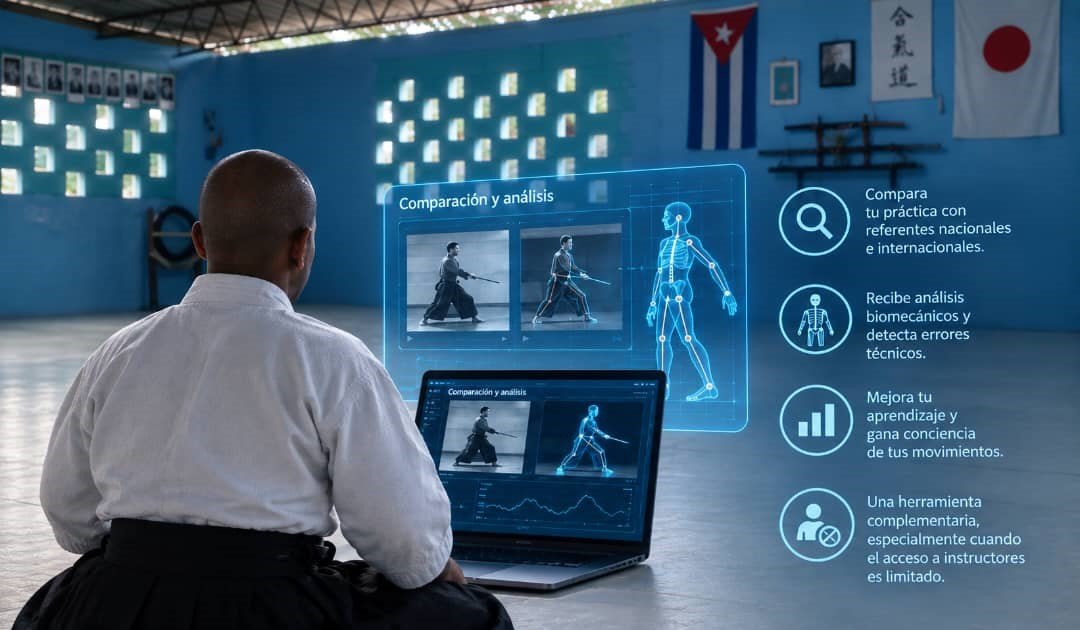
We were already using AI in our Dojo to analyze compliance with weekly training plans, generate class attendance statistics, and improve organizational and management aspects. Now we have taken a step further, incorporating it as a support tool for the technical learning of Iaido. We have used AI tools to compare videos of our kata execution against videos of national and international references. From these comparisons, we requested biomechanical analyses that allowed us to identify technical errors and better understand aspects of our movements that previously went unnoticed.
This does not mean that AI has replaced an instructor. AI cannot replace the experience, knowledge, or direct correction of a master. But it has become a complementary tool for us to study and analyze our training, especially when access to specialized instructors is limited.
We still consider in-person guidance to be necessary and irreplaceable, but as long as that possibility is not accessible with the frequency we need, why not responsibly leverage the tools within our reach?
Perhaps AI is not the ultimate solution, but it can be an alternative to keep progressing when the master is far away.
|
|
Art. 8
Aikido's Fundamentals Beyond the Dojo
By Edian Domínguez Cueto
Dojo Shin Sakura, Camagüey, Cuba
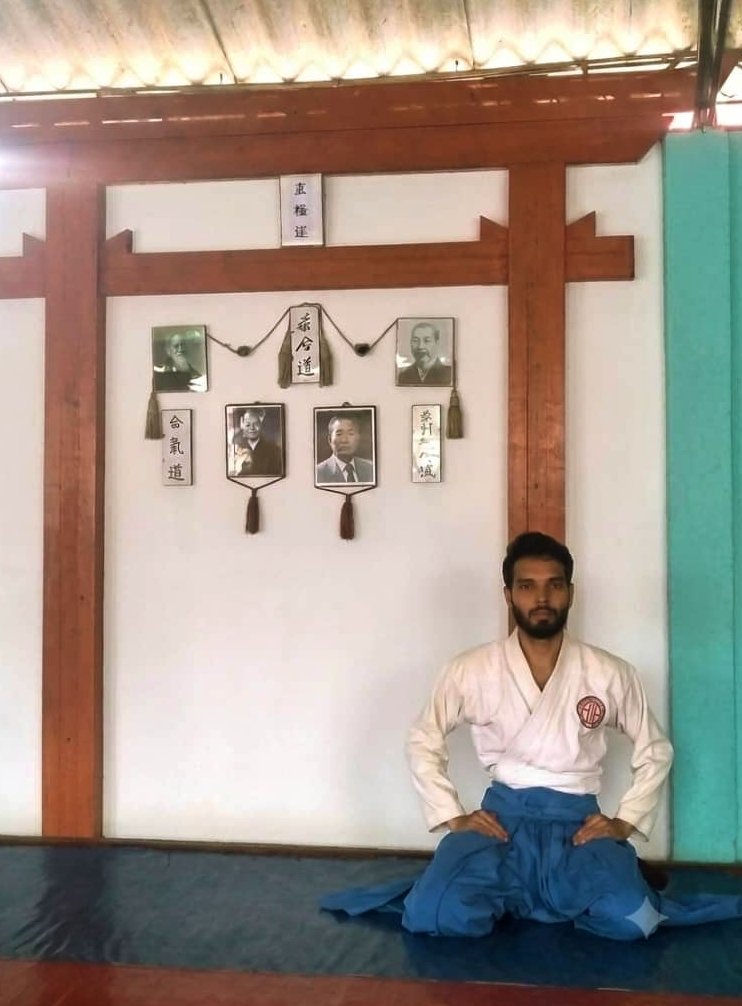
Aikido, created by Morihei Ueshiba (O-Sensei), transcends self-defense and technical repetition. Its ultimate goal is peace, universal harmony, and the integral development of the human being.
The fundamentals of Aikido are not the techniques themselves, but the principles that govern them. Those same principles are extrapolated to daily life:
Shisei (Posture): Physical alignment and ethical attitude; maintaining posture and composure day-to-day.
Kokyu (Breathing): Energy control that provides fluidity in practice and stress management in daily life.
Kamae (Guard): Being alert and prepared; in life, it represents foresight when facing the unexpected.
Ma-ai (Distance): Knowing how to gauge space with an opponent or distance oneself from harmful environments.
Irimi, Tenkan, and Tai Sabaki (Entering, Turning, and Body Movement): Evading what causes harm, changing course, and knowing how to put oneself in another's shoes.
Omote / Ura (Front and Back): Knowing when to act directly (Omote) and when to exercise patience and seek alternatives (Ura).
Atemi (Distraction Strike): Determination and continuous focus to overcome obstacles.
Kuzushi (Unbalancing): Respecting the preparatory process; there are no fruits without proper work and preparation.
Kokyu Ryoku (Power of the Center / Hara): Acting with integrity and full presence in every moment.
In conclusion, Aikido seeks balance between technique and philosophy. As O-Sensei taught, everything learned on the tatami must be linked to universal principles: a martial art for living in harmony beyond the dojo.
|
|
Art. 9
Book Corner: Technical Aikido
By Mitsunari Kanai Shihan, 8th Dan
Chief Instructor of New England Aikikai (1966-2004)
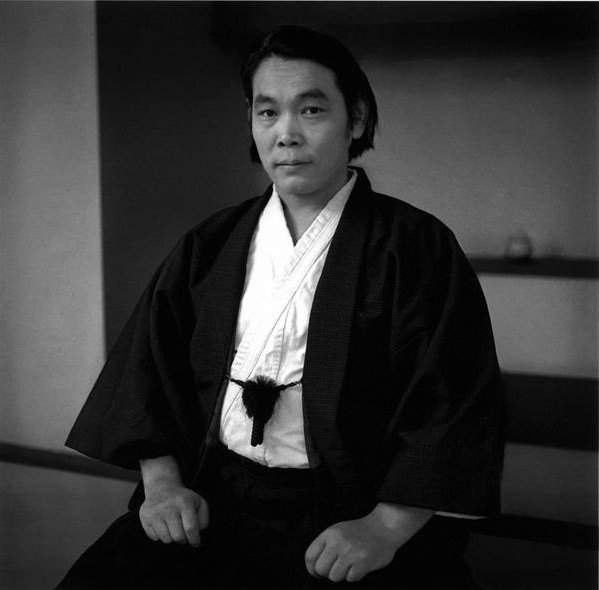
Editor’s note: Our "Book Corner" series features selected installments from works that inform and enrich our practice.
This issue presents Part 2 of Chapter 6, the concluding chapter of Mitsunari Kanai Shihan’s "Technical Aikido".
CHAPTER 6 - CONCLUSION: DEVELOP EYES TO DIFFERENTIATE TRUTH FROM FALSEHOOD - (Part 1)
Aikido is...
At the core of the practice of Aikido, more than anything else, is a continuous hard training and
disciplining of one's body and mind in order to develop wisdom. In the event of a confrontation,
beast-like behavior aimed solely at protecting oneself and injuring the opponent must be
avoided at all costs. To develop the determination to resolve a confrontational situation with
omniscience and omnipotence (that is, using not merely technique but applying the entirety of
one's abilities and wisdom) is BUGOKORO (Budo's spirit/mind). One must realize that Aikido is
neither more nor less than the expression and embodiment of this Bugokoro.
YAMATOGOKORO is what Aikido Advocates
Because Aikido includes the elements of BUGI (combat techniques), it is inevitable that, at
times, the Aikido practitioner must face the possibility and the reality of confrontational
circumstances. If one seriously and continuously probes into the reality of coming face-to-face
with an opponent in a show-down situation where one's very existence is at stake, that is, where
one's survival means the opponent's defeat or vice versa, and if one were to fully and openly
recognize the inter-relation between oneself and the opponent, it would lead one to discover the
most logical and efficient fighting techniques.
It is nonetheless true, however paradoxical it may seem, that in pursuing the perfection of this
principle, one will eventually arrive at a harmonious state, born from the insight that no matter
how strong one is, one cannot continue to exist if one tries to fight against all existence. This is
the "Way" (or process) to reach harmony as advocated by Aikido.
One should bear in mind, however, while trying to understand or attain the principle of harmony,
that without going through the internal transformational process that begins in the state of
confrontation and only after working through a critical process eventually arrives at the state of
non-confrontation, there can be no Budo.
Under normal conditions, living things live in groups, not alone. A basic feature of social
existence is the development of relative descriptions or comparisons, for example, strong
versus weak. Each being tries to use its individual qualities to best advantage in light of its
relative strengths and weaknesses. The process that eventually led to Budo began with efforts
to compensate for weakness by developing specific qualities (for example, speed, or strength, or
size, or facility in using weapons). Therefore, under normal conditions, living in the world leads
at times to confrontational situations, and developing increasingly effective techniques for facing
such confrontations eventually leads to the realization that there is always someone or something
bigger or stronger than oneself. Ultimately one realizes that the most effective
defense is to merge with and become part of the opponent. This is how the principle of
confrontation evolves into the principle of non-confrontation.
Yamatogokoro is the idea that the reason for developing martial arts is to protect those who are
unable to protect themselves from aggressors. The proponent of this philosophy devotes
himself to developing Budo in order to protect the security of peaceful people from the victory of
cruelty and violence. This idea is at the heart of Aikido.
It should be understood that Aikido includes a philosophy and ideas that go beyond martial arts
defined as the practice of combat techniques. Therefore, martial arts is included within Aikido,
but Aikido goes beyond martial arts. Aikido stands for the idea that Budo, the principle of
confrontation, and the principle of non-confrontation can be synthesized without compromising
any of their fundamental essences. However, it is sad to note that much of what is called
practice has compromised these elements. What follows is a technical description of the
physical principles which must guide true Aikido practice if it is to achieve total, rather than
partial, realizations of this art.
CHAPTER 6 - CONCLUSION: DEVELOP EYES TO DIFFERENTIATE TRUTH FROM FALSEHOOD - (Part 2)
Conclusion
I firmly believe it is worthwhile to admire, appreciate and praise the beauty of Aikido's movement
and the beautiful, harmonized stability produced by its advanced techniques and highly trained
skills. Because it looks beautiful to the eyes of spectators and has an artistic side through which
a person can display his own philosophy, Aikido has gained widespread recognition and has
spread broadly in society.
Because of Aikido's unique characteristic that its techniques avoid confrontation and
create unity and harmony, Aikido has been accepted by the world and praised by many people
as the beautiful Budo of Wa (the martial art of harmony). Also, there are people who, as if
responding to a social demand, go so far as to think of and seek Aikido based on a view that the
technical beauty of Aikido is the essence of Aikido.
Although the movement of Aikido looks very beautiful to the eyes, one must not lose sight of its
true essence. We tend to be caught up with its beauty. But because we are too attached to this
beauty, we tend to lose the essence of Aikido and the direction its practice should take. I wish
people to know that Aikido's beauty as a form, which surfaces externally, is only a by-product of
its practical effectiveness in coping with the fighting relationships of attack and defense that
arise inevitably in our current social system.
The reason why I seek practicality rather than beauty in Aikido is that I want to observe the
essence of its fundamental substance correctly even when manifested in how beautiful it is. I
have spent my entire life and an enormous amount of energy so that I will not fail to recognize
the Way of Aikido. I have been doing it only for this.
If one can look hard and purely at the essence of Budo, one would recognize without fail that
Aikido is not a fancy kind of sport. I wish that people would not forget that to look hard at Aikido
through the eyes of Budo, which is based on the principle that the rational and practical
substance of a thing is its most beautiful aspect, is of critical importance in learning Aikido, and
comprises the greatest part of its practices.
Technical Aikido © Mitsunari Kanai 1994-96
|
|
Comic10
Comics - Aikido Animals: The Hungover
By Jutta Bossert

The Hungover
Has been partying a bit too much last night,
but hopes that nobody will notice.
© Jutta Bossert - Used by permission.
|
|
Art. 11
The first step?
By Maria Paz Santillan
Shodan, Kokoro Dojo, Córdoba, Argentina
I remember when I started training. I felt intimidated by everything. My teacher was like a magical being
from beyond who knew everything about everything. The things he said and did seemed incomprehensible to me;
the more advanced students spoke in Japanese, fell without getting hurt, understood the techniques, and practiced.
I felt like I was the only one who didn't know anything. It was almost embarrassing, and of course, I felt like
running away. At the same time, I knew I was in the right place. My teacher, likely noticing this obvious state,
told me, "Don't worry, everyone had their first class, and nobody was born knowing Aikido." And without even
noticing it really, in my very first class I had my first realization. The first step was walking into the dojo
to ask about the training schedule.
I remember how difficult it was to enter that time. A place with Oriental items, diplomas, and black belts, which
even scared me a little bit. Will they hit me? Am I worthy of training in something like this? And, at a moment
when I believed I wasn't capable of achieving anything, I had to believe in myself enough to feel I was capable
of doing it. Sometimes it seems like training gets harder as the years go by, but in my
experience, it was hard right from the beginning.
I remember watching my classmates in the first few classes wearing their black and blue "skirts," and I admired them
for their great technique, practice, and above all, their calmness. They looked so peaceful. I was shaking with nerves.
I dreamed of being like them one day, of being able to practice like my teacher practiced. Was something
like that even possible?
As the months went by, I began to feel like I understood a little more. I was already "getting" Tsuki Kotegaeshi.
If the teacher demonstrated the technique, I already knew what to do. I said to myself internally: "Ah, this wasn't so
complicated after all." (Haha!)
My ego started to grow. In a way, it was something I needed: to feel good at something. My self-esteem
started to improve tremendously. My teacher praised me, saying, "Very good!" and after a long time, I
felt like I was accomplishing something, that I was doing something right. I went home feeling
happy and fulfilled, thinking: "Everything is smooth sailing now, and when I become a black belt, I'm going to be an absolute
master," already imagining myself knowing everything, leaping through the air, knowing every technique in the world, and
without a single doubt. Everyone would applaud me.
With the passage of time, my teacher began correcting details. My sempai did too. The standards
were rising. I needed to improve. I started hearing phrases like "always keep a beginner's
mind" or "there are always new things to learn." I was confused. What was that about? I
didn't want to be a beginner; I wanted to know everything about Aikido. Every time I heard that phrase,
something inside me stirred and bothered me. Today I see it: it was a kind of inner alarm saying,
"Listen," but I didn't know how to.
The training sessions grew more difficult—spiritually and technically. I no longer returned home feeling so
fulfilled. Instead, I returned frustrated because I felt like nothing was working out. There were even classes where
I asked my teacher if I could step out and hid in the bathroom because of how much the class was costing me emotionally.
There were too many things I couldn't get right, and no matter how hard I tried a thousand times, they weren't going to
work in that class, nor the next, nor the next, nor the next. It was like banging my head against a wall,
time and time again. It required time, patience, and self-respect. I had no idea that I was
learning something so immense. I only felt like I wasn't learning anything because the techniques weren't working out
for me.
There were several years of training like this. My mind started telling me: "Are you sure you want to keep going with this?
It's clear you're not going to make it, nor do you belong here. You can't manage anything. Give up." And it
tried every single day. On some days, it almost succeeded. I almost quit many times. But my teacher kept saying
time and time again: "beginner's mind," "patience," "we are here to learn," "the black belt
is only the first step." And so I kept going, even if I didn't fully understand what he was talking about.
How could the black belt be just the first step?
One day, training in a rush to learn faster, I got injured. I tore my knee ligaments.
Everything turned dark; nothing could be seen. And in that darkness, I had to choose which voice to listen to. The one that
demanded, quit, and complained about everything, or the other one, sitting in seiza, unhurried and silent, waiting
to be given a space.
I started listening to that voice. I started listening to the voice that spoke to me with patience. Real
learning began, inside and outside of "the technique." I started understanding that all of this was only just beginning. My
classmates and the Dojo were also essential to keep going, because amidst all the frustration I
could feel, I felt like I was at home, that it was a safe place to be, to make mistakes, fall,
and get back up a thousand times, and above all, that I wasn't the only one going through this. Everyone was
learning just like me, even my teacher spoke of himself as a learner. How could I not
be learning anything if even my Sensei was still learning?
As time passed and I returned to training, new classmates were also starting out;
others were having "their first class," and I saw them just as I was when I started. In a way, I felt that these
new members saw me the way I saw my senior classmates when I began. It felt very strange. I realized
that I was no longer such a "novice," but at the same time I was sure of one thing: I knew
practically nothing. And I was about to test for my black belt.
I will never forget a conversation I had with my teacher a few days before testing: "Sensei, I remember
how I imagined being a black belt when I first started training—flying through the air and knowing
absolutely everything. And here I am: I assure you, teacher, that I feel more like a beginner than the day I
started. And I will understand if you tell me I'm not ready to test."
He just laughed, took a moment of silence, and told me: "This is precisely why you are ready."
At the time, I didn't fully understand what he meant—in fact, I think I still don't completely understand it—but I nodded and
presented myself for the exam.
For me, the feeling of taking the test was an attempt to achieve that incredibly difficult sweet spot of feeling ready
for something, yet with the humility of knowing there is still so much left to improve. That this doesn't mean anything
bad; quite the contrary, it is the best thing that can happen. And that it will always be this way, because that is what
life is all about.
Today, having worn the hakama for a few months now, I still trip over it; at times I don't know how to tie it properly,
and it comes loose in the middle of practice. During my first few classes with the hakama, I forgot how to put on
the belt. I did Mae Ukemi with the wrong leg forward. My teacher laughed with pride and kept walking. I didn't understand.
We had to start all over again. But the strangest thing was realizing something very important: despite everything,
I no longer went home frustrated or angry. I walked back home, in a way, holding hands with myself, telling myself:
"Patience."
Thanks to Aikido and my teacher, I learned so many things: to feel grace for life, humility, perseverance,
steadfastness, discipline... I learned to listen to my heart, the Kokoro. And the most beautiful thing of all is that
I realized this is barely the first step... What else may lie ahead?
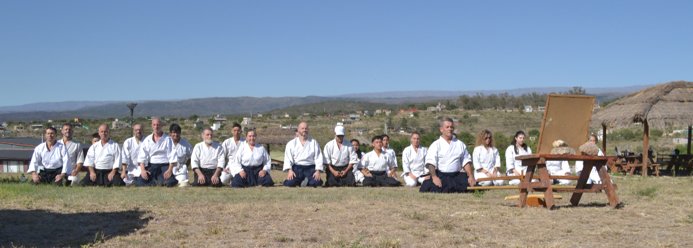
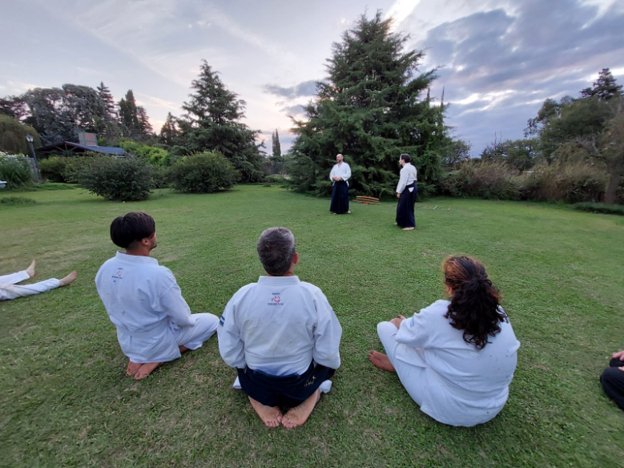
The photograph above represents a bit of what I'm trying to say. The most beautiful image of my school and everything it
has given me: our Sensei in seiza beside his students, watching a small class taught by one of them.
|
|
Art. 12
Kids are like diamonds
By Agnese Trocchi
Associazione Aiko, Dojo Salvatore Mergè, Roma, Italia
About fifteen years ago, at a center for Eastern cultures in Rome, I was introduced to an elderly Ikebana teacher.
At the time, I had recently begun teaching Aikido and was in charge of a small dojo in the university discrit in Rome.
The Ikebana teacher's name was Mayumi Mezaki; she lived in Japan but was visiting Rome for a seminar, and she was
introduced to me as an acquaintance of O Sensei's. After we introduced ourselves to one another, the teacher told
me about her encounter with Morihei Ueshiba. Her parents were religious-Shintoists, followers of Omoto-kyo, and
friends of Onnisaburo Deguchi. They lived in Iwata, and she often met Master Ueshiba; she was a little girl at
the time, and he was always very cheerful: every time, he greeted her respectfully, as if she were an adult.
She was deeply impressed by this man's behavior, since adults usually ignored her or treated her condescendingly.
"Budo is love and respect" Mrs. Mezaki told me on that occasion.
I have reflected at length on this brief anecdote, which has greatly influenced my approach to teaching children.
The image of O Sensei bowing respectfully before a little girl has remained in my heart and guides my approach with
the youngest students.
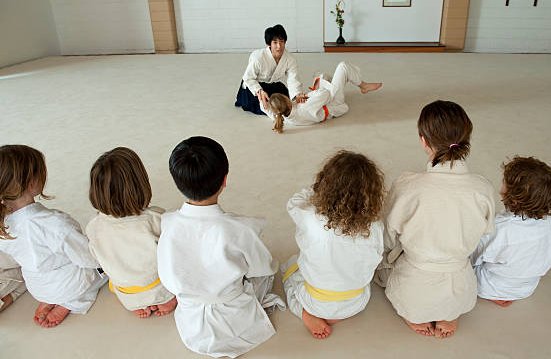
My classes aren't very large, but I've taught as many as forty children at public events and led intensive courses
for dozens of children during summer camps.
Children always amaze me, even the most boisterous ones, and, guided by the image of O Sensei bowing before them,
I have always done my best to listen to them and not merely pass on my knowledge, but to be open to learning from
their curiosity and spontaneity.
Hiroshi Tada Shihan, a direct student of O Sensei, has repeatedly advised us-when speaking about Aikido for
children-to show them only clean movements, never to point out mistakes or what not to do, but only the beauty
of correct movements. "Children are like diamonds", he has told us time and again, and it is our responsibility
to teach them by showing only the best. In this regard, he explained to us more than once what the method in Japan
was for raising great sword connoisseurs: "From a very young age, they are shown only swords of the highest
craftsmanship; in this way, children develop a special aesthetic sense that will enable them, when they grow up,
to distinguish quality swords from imitations."
It is a great responsibility for us teachers-who are certainly not perfect!-to showcase the best of Aikido. With
goodwill and confidence, we grow as teachers, striving to demonstrate clean, precise lines to those younger than us.
My students are extremely curious. At the end of each lesson, they flood me with questions about combats, swords,
how to deal with bullies, death, the effectiveness of techniques and the history of my teachers, all the way back
to O Sensei. They ask me what meditation is, what it's for, and how samurai can see attacks coming from behind...
"You have to practice", I usually reply. And I introduce elements of zazen into the next lesson, or the practice
of Ishin-denshin (mind-to-mind, heart-to-heart transmission) for the development of the sixth sense, as organized
within the Ki no renma training system developed by Hiroshi Tada Shihan.
One of my eight-year-old students, a boy on the autism spectrum who is absolutely passionate about Aikido, one day
while practicing kokyu-ho with a girl a little older than him, looked her in the eyes and said, "Imagine the movement
clearly because I'm very sensitive and I'll do whatever you imagine."
I myself have experienced this firsthand while practicing kokyu-ho with the youngest students. When it's their
turn to be tori, instead of throwing me, they throw themselves to the side on their own. I realized the responsibility
lay with me-I was visualizing the movement so clearly that they ended up being thrown.
Francesco-that's the boy's name-after five months of practice, managed to perform the backward fall for the first
time during his exam, thus earning a well-deserved 10th kyu!
Having a clear understanding of the lines of waza is extremely important when teaching both adults and children,
especially when teaching children, who are much more receptive than adults. Enea, seven years old, during his first
lesson, while desperately trying to master the tenkan movement, asked me, "Do you guys always struggle this much in
class?" That's when I realized it was my responsibility to connect with him so I could convey the kinesthetic sense
of the movement to him mind-to-mind, heart-to-heart. Sometimes demonstrating isn't enough, just as simply watching
with your eyes isn't enough to learn a waza or a basic movement. Rather, it's necessary to observe the teacher with
"all your senses", and as we watch the teacher perform the technique, as students, we must be able to "feel" the
movement as if we were performing it ourselves. Despite his initial difficulties, Enea was immediately able to perform
tenkan in his second lesson.
A few days later, Enea asked me, "Are you rich?" "No, sweetheart", I replied, "Why would I be rich?" "Because you're
a martial arts teacher!" he answered enthusiastically. I didn't want to disappoint him too much: "I'm not rich, my
love; it's hard to get rich teaching martial arts, but I'm very happy to teach Aikido to the adults of the future,
like you."
|
|
Art. 13
About Dojo Himawari
By Juan Carlos Delgado
Dojo Cho Dojo Himawari, Lima, Perú
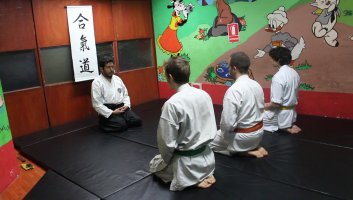
Opening a dojo can be a romantic idea. Confronted with the busy world of a chaotic city like Lima,
having a space for the cultivation of body and mind, within a traditional Japanese lineage, demands a
special commitment that few are interested in undertaking.
Himawari Dojo was initially born as an idea nearly twenty years ago, when I was a 5th Kyu in Aikido.
I watched a class with my teacher, Shihan Morales-Bermúdez, and was left reflecting on how profound the
teacher-student relationship is in traditional Japanese martial arts—a relationship that extends to the space itself, the
cleanliness of the dojo, its atmosphere, its etiquette, and so on. I was in my final year of Fine Arts, specializing
in Painting, and I found myself facing the contradictions inherent to the local art scene: the struggle for media
coverage regardless of the artwork's quality; the vanity with which a certain audience appreciated
exhibitions, more interested in taking a selfie than in being present; that sense of immediacy and
volatility characteristic of our times.
Artistic expression, in the case of painting, is a transformative experience—both for the artist,
who can undergo a process of self-discovery, the (re)construction of their identity, and social dynamics
that enrich them; and for the public, when conditions allow them to resonate with and learn something from
the work. The dojo, on the other hand, establishes certain standards for that transformative process: presence,
attention, posture, attitude, hygiene, and so forth, which the Sensei helps to shape; as well as the work within the
practice community—in that martial and spiritual sharing that takes place over years or decades on the tatami.
In general, that same teacher-student relationship does not occur in a university or school, since the instructor
accompanies the student for only an academic term (four months) or a single school year. Afterwards, that relationship
virtually ends, alongside the rigid objectives that these institutions demand from educators
within an increasingly instrumental and automated perspective.
When I graduated as Shodan, while transitioning into teaching at a private university,
I began searching for a place where I could teach Aikido. It was late 2012. I visited, called, and wrote
to several martial arts academies. Most offered combat sports (Muay Thai, BJJ, and MMA), which were
driven by the popularity that Mixed Martial Arts had gained through the Ultimate Fighting
Championship (UFC) in mainstream media. One academy offered Aikido classes, but it was not
affiliated with the Aikikai line. We did not reach an agreement to teach there.
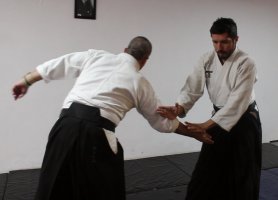 At that time, my mother ran a private early childhood education center, KinderArt, ten blocks from where I live,
in a three-story house that my parents built in the 1980s during Alan García's first presidency.
KinderArt operated on the first floor and had a small patio where the children played. I asked her for the space
during specific hours and began saving money to purchase mats. It could fit approximately
eight 200cm x 100cm mats.
I produced a thousand black-and-white bi-fold flyers and started distributing them among the neighbors. I launched a fan page on
the social network Facebook and posted an announcement on what was then my website: juancarlosdelgado.com.
One student enrolled, Romina (10 years old). We inaugurated the dojo on December 19, 2013. I believe a few
fellow practitioners attended from Dojo Kaze, where I trained—also located in the San Miguel district inside
Black Dragons Academy—along with my instructors, Javier Geng (with whom I began my Aikido practice in 2005)
and Sensei Carlos Abanto (who took charge of classes at Dojo Kaze following his return from the United States).
Both dojos were affiliated with the Asociación Peruana de Aikido - Centro Aikikai, an organization led by
our Shihan Morales-Bermúdez.
With Romina, we trained for about a year and a half. She reached 5th Kyu, yellow belt, and
left shortly thereafter. The following month, Edgar (47 years old) arrived and stayed for about a year, reaching
5th Kyu. In 2015, Kirill (14 years old), of Russian descent, enrolled and, unlike the previous students,
continued training well beyond 5th Kyu.
During the dojo's first two to three years, I was practically giving private lessons. With Kirill, a small group
began to form. David (57 years old) and Ángel (14 years old, from Venezuela) arrived, both leaving short
after reaching 5th Kyu. Later, Joel (34 years old) joined, resuming his Aikido practice
after several years as a 5th Kyu, along with Valentín (14 years old) and Nicolás (8 years old). In 2018, Herson
(38 years old) arrived from Caracas, transferring his 4th Kyu rank from Dojo Ávila Aikido.
By 2019, only Kirill (1st Kyu), Joel (2nd Kyu), and Herson (2nd Kyu) remained. Valentín and Nicolás had left
a few months after achieving 5th Kyu. Due to personal reasons, Kirill and Joel stepped away from training, leaving me
once again with just one student. Herson and I worked together until March 2020, when the pandemic arrived.
The pandemic was essentially a fresh start—this time via Zoom, with everyone tuning in from home. I began
offering classes on Mondays, Wednesdays, and Fridays in the morning from 6:30 AM to 7:30 AM. One constant
attendee was Andrés (40 years old), a childhood friend interested in the discipline. The session structure
was: meditation, stretching, rolls, footwork, and basic movement sequences with a wooden staff or sword.
In recognition of his dedication, Andrés received his 5th Kyu in 2021.
My friend's progression was the reverse of most practitioners, given that his initial experience with
Aikido was entirely virtual. As classes gradually returned to in-person practice, he found it difficult to adapt to the new
demands: commuting back and forth, the physical contact and tension, and so forth. Eventually,
he stepped away from Aikido.
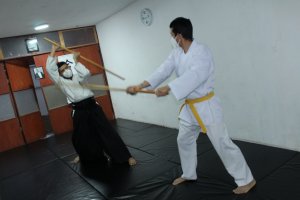 KinderArt closed with the pandemic, so we gradually took over the space and reconditioned the dojo. We expanded
to 18 mats of 200cm x 100cm and set up morning and evening schedules. This essentially marked the beginning of a new stage,
the third, for the dojo. Herson resumed in-person classes and took his Shodan exam in 2023. Joining
the practice were Héctor (33 years old), from Venezuela and also a Goju Ryu Karate instructor; Joaquín (7 years old),
who stayed with us until 5th Kyu; and Andrés (15 years old). Héctor spent nearly four years with us, reaching
2nd Kyu. We held a moving farewell class for him before he traveled to Europe in May 2025, where he currently resides.
Affiliated with the Asociación Morihei Ueshiba del Perú, an organization led by our Shihan Morales-Bermúdez,
and as members of the Shinkaze Aikido Alliance, we continue our practice. Herson serves as the dojo's Senpai; Andrés is now
of age and preparing for his 2nd Kyu exam; and Tasuku (27 years old) is our newest member. Originally from Japan, he practiced
Aikido as a child, and Kendō and Kyudō in his youth. He speaks little Spanish. We learn a great deal from him and his culture simply by watching him
train.
Over these nearly thirteen years of activity, approximately eighty people have passed through our Aikido classes. The
majority were men; among visitors and curious seekers, eight have reached 5th Kyu, and only five have managed to go a bit further.
Seeking the atmosphere of a welcoming yet demanding home-based dojo, Himawari Dojo currently offers classes in
Judo and Zazen as well—disciplines from which we also learn, helping us cultivate a beginner's mind.
|
|
Art. 14
Dojos granted Provisional Member status

We are pleased to announce that the following dojos have been granted Provisional Member status:
- Monserrate Aikido Bogotá, located in the city of Bogotá, Colombia, led by dojo-cho Alejandro Rojas Mora, godan.
- Isshinkai Aikido Dojo - Isla Margarita, located in the city of La Asunción, Nueva Esparta, on Margarita Island, Venezuela. The dojo is led by dojo-cho Luis Felipe Villarroel De la Concha (sankyu), under the supervision of Shidoin Rafael Pacheco (godan), dojo-cho of Venezuela Aikido Kokyu Ho Dojo in Maracay, Venezuela.
A warm welcome!
|
|
Art. 15
Yudansha Promotions
The following Shin Kaze member promotions were submitted for registration at Hombu Dojo in June and October 2026:
Yondan (4th dan)
John Robinson - Aikido Of Austin - USA
Caroline Zeiss - New Haven Aikikai - USA
Sandan (3rd dan)
Brenda E. Caldwell - New Haven Aikikai - USA
Tegra Anne Rosera - Aikido Of Austin - USA
Matthew J. Stevens - New Haven Aikikai - USA
Scott Weber - Aikido Of Austin - USA
Nidan (2nd dan)
David Leslie Avery - Aikido Of Austin - USA
James Winston Woodruff - Aikido Of Austin - USA
Franklin De La Hoz - Marubashi Aikido Dojo - Venezuela
Shodan (1st dan)
Juan Pablo Bobadilla - Kokoro Dojo - Argentina
Ludmila Abigail Ocampo - Kokoro Dojo - Argentina
Adriana Carolina Rada - Kokoro Dojo - Argentina
Nicolás Rivadulla - Kokoro Dojo - Argentina
María Paz Santillán - Kokoro Dojo - Argentina
Volodymyr Parkhoniuk - Sei Fu Kai - Ukraine
Iaroslav Soroka - Sei Fu Kai - Ukraine
Andre Alexander Shelby - Aikido Of Austin - USA
Marlon David Castillo Mena - E N A Zen Bu Dojo Aikikai - Venezuela
Oban Velasquez - Aikido Avila Dojo Aikikai - Venezuela
Our heartfelt congratulations to everyone—please keep up the great work!
|
|
Art. 16
Art. 17
Art. 18
Art. 19
Art. 20
Dear Dojo-cho and Supporters:
Please distribute this newsletter to your dojo members, friends and anyone interested in
Shin Kaze Aikido Alliance.
If you would like to receive this newsletter directly, click
here.
|
|
|

|
SUGGESTION BOX
Do you have a great idea or suggestion?
We want to hear all about it!
Click
here
to send it to us.
|
Donations
In these difficult times and as a nonprofit organization, Shin Kaze welcomes donations to support
its programs and further its mission.
Please donate here:
https://shinkazeaikidoalliance.com/support/
We would also like to mention that we accept gifts of stock as well as bequests to help us build
our Shin Kaze Aikido Alliance endowment.
Thank you for your support!
|
|
|
|
|
|