Comments
Header
News from Shin Kaze
January 2026
Shin Kaze Aikido Alliance is an organization dedicated to the practice and development of
Aikido. It aims to provide technical and administrative guidance to Aikido practitioners and
to maintain standards of practice and instruction within an egalitarian and tolerant structure.
|
|
Contents
Intro
Introduction
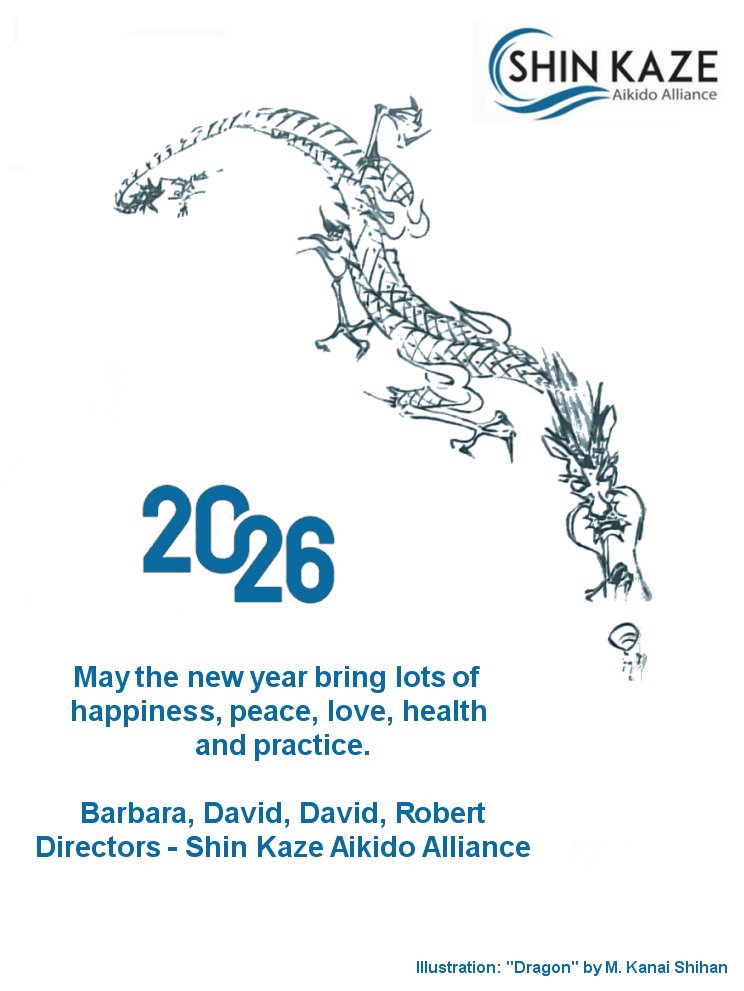
Happy New Year 2026 to all Shin Kaze Aikido Alliance members!
We hope you, your families, and your dojo communities enjoyed a restorative holiday season and have returned to training
with renewed energy.
This edition of the Shin Kaze newsletter highlights major milestones for our organization and the personal stories
that give our community its depth.
A truly defining moment for Shin Kaze Aikido Alliance arrived late last year. After six years of perseverance, dedication,
growth and belief in what we are building together, we are overjoyed to announce our official recognition by Hombu Dojo. What
began as eight founding dojos has blossomed into a thriving and dynamic international community of more than fifty — a
powerful reflection of the heart, dedication, and spirit that each of its members brings to Shin Kaze. This recognition belongs
to all of us.
We also celebrate our 2025 yudansha promotions, recognizing practitioners across the Americas and Europe whose ranks have
been formally registered at Aikikai Hombu Dojo.
Beyond these achievements, this issue turns to the heart of Aikido—its philosophy, pedagogy, and people.
There is an article on how Shin Kaze is strengthening its foundation as it moves ahead with renewed momentum, strong connections, and key structural improvements.
Reflections on Kanai Sensei’s dragon artwork and his teachings on ukemi remind us of the spirit and precision at the core of our art, while a lighthearted comic offers a smile we can all relate to. We share the reopening story of Aikido Fujisan Dojo in Caracas, now a Full Member of Shin Kaze, along with a senior instructor’s reflections on 33 years of teaching and heartfelt impressions from teenage students in Uruguay. We also explore the educational journey from mukyu to yonkyu and hear from three young aikidoka whose transition from youth to adult classes highlights how Aikido shapes confidence, identity, and connection.
We hope you enjoy this issue and feel inspired by the many perspectives within it. Our sincere thanks go to all who contributed their stories and insights. Aikido evolves through the experiences of its practitioners, and your voices are essential. We warmly invite you to share your reflections, dojo initiatives, or personal insights for the next issue. We want all of Shin Kaze to see Aikido through your eyes.
Wishing you good practice, good health, and harmony on and off the mat.
Barbara, David, David, Robert
Directors – Shin Kaze Aikido Alliance
|
|
Art. 2
Hombu Dojo recognizes Shin Kaze Aikido Alliance
By Board of Directors - Shin Kaze Aikido Alliance
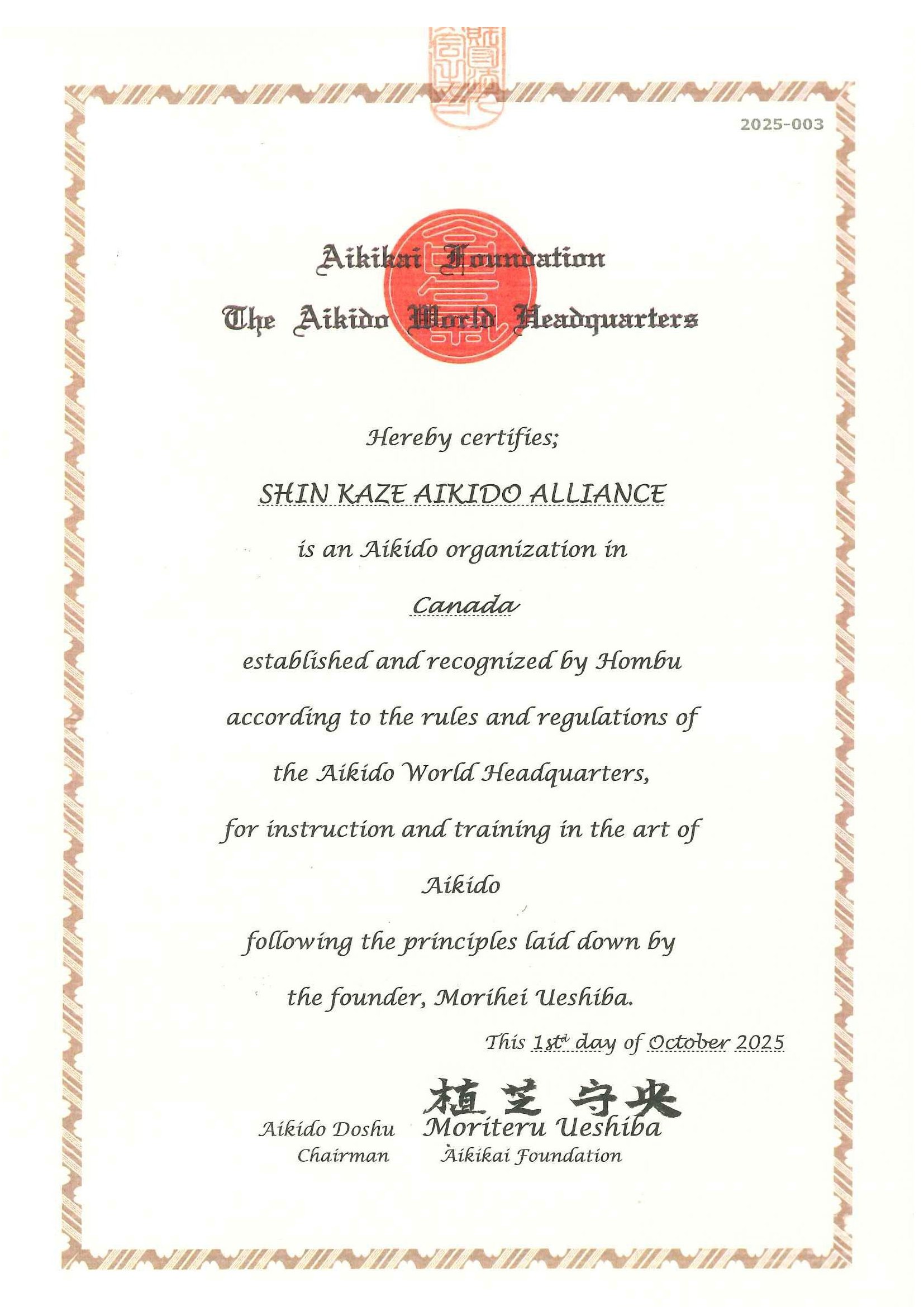
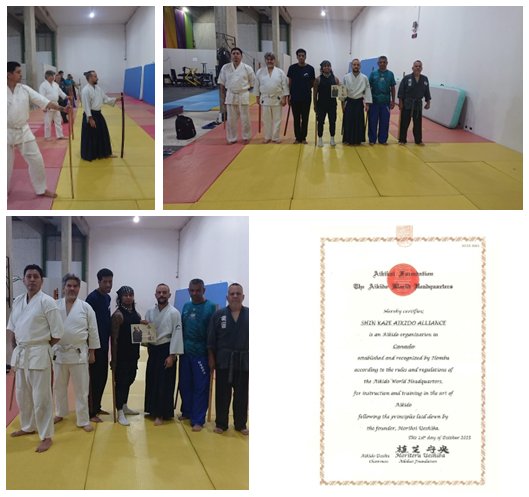
We are pleased to announce that, in accordance with the Aikikai Foundation's International Regulations,
Hombu Dojo, the Aikido World Headquarters in Tokyo, has granted
Hombu Official Recognition status
to Shin Kaze Aikido Alliance effective October 1st, 2025.
This milestone reflects Hombu's formal endorsement of our organization and our work, and underscores our commitment to
advancing Aikido's technical and ethical standards.
Inspired by the Aikikai's enduring legacy—passed down by our teachers—we look forward to continuing to contribute
to Aikido's growth and harmony worldwide. We pledge to pursue the art's highest ideals while deepening ties of respect
and partnership with the Aikikai.
What began in 2019 as a modest organization consisting of eight dojos has, in six short years, grown into a thriving
worldwide community.
Today, Shin Kaze Aikido Alliance unites more than 50 dojos and over 750 dedicated practitioners,
and has official recognition from Hombu Dojo.
This remarkable journey reflects the unwavering commitment and steadfast support of our members.
We thank each and every one of you for helping make this happen!
And we're just getting started.
Barbara, David, David, Robert
Directors - Shin Kaze Aikido Alliance
|
|
Art. 3
Strengthening our foundation as we move ahead
By R. Zimmermann
President - Shin Kaze Aikido Alliance

As we move further into 2026—now as a Hombu-recognized organization—a strong sense of dedication, growth, and resilience is evident throughout Shin Kaze. Despite the challenges of recent years, from sustaining operations during the pandemic to building processes that meet both our members’ needs and Hombu’s requirements, and crafting policies that require consensus among thoughtful individuals from diverse Aikido backgrounds and professions, we have achieved significant advances in organizational connection, operational excellence, and dojo empowerment. Together, these developments position Shin Kaze for a vibrant and enduring future.
Building bonds through connection
Shin Kaze is an active, engaged, and deeply connected community. The heart of our practice—daily training in our dojos and participation in local and international seminars—continues to strengthen the bonds among our members, keeping the organization vibrant and its direction steady. Many practitioners have further enriched their training by joining virtual weapons and Iaido classes. Online technology has also helped connect members with specific regional needs and created digital spaces for shared dialog and collaboration, such as the early‑January meeting of dojo‑cho from Latin American countries. Our recent official recognition stands as a proud and uplifting milestone that firmly anchors us within the global Aikido community, deepening our roots and widening our reach more than ever before.
Operational excellence in action
Through our ongoing communication with members throughout the year, the seasonal greetings shared in December, and the steady processing of kyu and dan promotions as well as Fukushidoin and Shidoin designations, the “gears” of our organization continue to turn smoothly. Our Aikido and Iaido Technical Advisory Committees—composed of members from several countries—meet regularly to refine technical standards and convey perspectives to the respective Technical Committees that reflect the needs of our diverse membership.
Advancing our digital infrastructure
While our practice has remained traditional, our infrastructure has taken a giant leap forward. Throughout 2025, Shin Kaze reached several technical milestones that ensure our administration is as fluid as our technique:
- Seamless Automation: We have successfully maintained a fully automated platform for kyu and dan processing. Promotions are now handled with minimal manual intervention, backed by weekly precision reporting.
- Financial Integration: A new custom-built invoicing and expense database now integrates directly with PayPal, streamlining payments and providing clear financial insights.
- Empowering Dojo-Cho: We’ve launched a web-based plugin allowing dojo-cho to securely access their own dojo’s data and download rosters instantly. We are also developing a dedicated Dojo-Cho Web Portal to allow for real-time data updates.
- Enhanced Communication: Using a new integration between FileMaker and Excel, we’ve recreated the classic “Dojo Roster” look and feel for annual updates, enabling professional, automated emailing directly to individual dojos.
- Smart Stewardship: By optimizing our database and automation platforms, we have secured a 50% reduction in our 2026 database operating expenses, ensuring our resources are used as effectively as possible.
Empowering dojos to lead and grow
One of the most exciting aspects of the Shin Kaze model is the autonomy and trust placed in our individual dojos. Unlike organizations with more centralized structures, Shin Kaze encourages dojo-cho to handpick their guest instructors and organize seminars that best fit their students’ needs. This intentional approach fosters a diverse and localized training environment, allowing each dojo to flourish according to its own unique spirit and relationships. We are proud to see our members continuing to host events and keep the mats busy.
Building a stronger governance framework
The Board has spent considerable time navigating complex discussions that naturally arise when thoughtful, engaged individuals with different worldviews work together. We are now focused on the essential task of refining our Bylaws and governance framework to improve operational efficiency and better respond to the needs of our membership. While this careful work takes time, the goal is clear: to establish a functional, organized foundation that will support Shin Kaze for decades to come.
Looking toward a new horizon
These are some of the things we envision:
- Clear Governance: Updated bylaws will soon provide an enhanced roadmap for our organizational growth.
- Active Committees: As governance matters settle, committees will see renewed activity and clearer roles.
- Shihan Guidance: Following Shin Kaze’s recognition, we are proactively seeking guidance from Hombu Dojo regarding the Shihan certification processes.
- Expanded Programming: We look forward to planning new initiatives as soon as our structural updates are finalized.
Our core work on the mat
Through it all, the most important work is happening right now on the mat. Dojos are operating, members are practicing, and the spirit of Aikido is vibrant and strong. We are not in a race with other organizations; rather, we are focused on our own traditions, our own timing, and the quality of our practice.
Moving ahead together
Shin Kaze’s future is bright because it is shaped by the dedication of its members.
As we continue to grow, refine, and strengthen our organization, we do so together—steadily, intentionally, and with
a shared sense of purpose rooted in our commitment to our community, our values, our mission, and the future we are
determined to build.
.
|
|
Art. 4
2025 Yudansha Promotions
The following Shin Kaze members were promoted throughout 2025 and their ranks registered at Aikikai Hombu Dojo:
Yondan (4th dan)
Andrew L. Benioff - Honsen Aikikai - USA
Guillermo Echeverría - Kokoro Dojo - Argentina
Heli Fernando Alva Delgado - Niji Dojo - Perú
William Omar Cadillo Chavez - Niji Dojo - Perú
Javier Arturo Raa Bustinza - Niji Dojo - Perú
Akira Nishisaki - Old City Aikido - USA
Sandan (3rd dan)
Juan José Antonio Maders - Kokoro Dojo - Argentina
Rodolfo Martín Sosa - Kokoro Dojo - Argentina
Jorge Francisco Campos Vizconde - Niji Dojo - Perú
Miguel Angel Naito Endo - Niji Dojo - Perú
Miguel Angel Kioshi Naito Kanashiro - Niji Dojo - Perú
Santiago Francisco Olave Flores - Niji Dojo - Perú
Pedro Juan Pando Ruiz - Niji Dojo - Perú
Mery Villegas - Niji Dojo - Perú
Jovani Enrique Lobo - Venezuela Aikido Kokyu Ho Dojo - Spain
Luís Eduardo Suárez Ruffino - Venezuela Aikido Kokyu Ho Dojo - Venezuela
Nidan (2nd dan)
Jim Zawisza - Framingham Aikikai - USA
Javier Argañaraz - Kokoro Dojo - Argentina
Roxana Anabel Bruno - Kokoro Dojo - Argentina
Gabriel Alejandro Da Rosa - Kokoro Dojo - Argentina
Daniel Alejandro Lalicata - Kokoro Dojo - Argentina
Diego Alberto Lozza - Kokoro Dojo - Argentina
Fabián Alejandro Servetto - Kokoro Dojo - Argentina
Vicente Paul Zenon Vargas Vela - Kokoro Dojo - Argentina
Carmen Cecilia Kanashiro - Niji Dojo - Perú
Antonio Matias Paul Villegas - Niji Dojo - Perú
Elizabeth Green - Old City Aikido - USA
Rodney Joel Landis - Old City Aikido - USA
Jessie Nguenang - Old City Aikido - USA
Shodan (1st dan)
Andrea Bellorin Rodriguez - Aikido Avila Dojo Aikikai - Venezuela
Sebastian Bellorin Rodriguez - Aikido Avila Dojo Aikikai - Venezuela
Mick Paul Fruthaler - Aikido Of Austin - USA
Andre Alexander Shelby - Aikido Of Austin - USA
Alonso Lacruz - E N A Zen Bu Dojo Aikikai - Venezuela
Augusto José Acosta - Kokoro Dojo - Argentina
Franco Nehuen Farías - Kokoro Dojo - Argentina
Nicolás Benjamín Loza - Kokoro Dojo - Argentina
Yeiko Valentín Marcano - Kokoro Dojo - Argentina
Marcelo Gustavo Martínez - Kokoro Dojo - Argentina
María Del Rosario Orozco - Kokoro Dojo - Argentina
Silvia Mónica Santamaria - Kokoro Dojo - Argentina
Hugo Alberto álvarez Aranzamendi - Niji Dojo - Perú
Herson José Ramirez Rondón - Niji Dojo - Perú
Rosa Bieber-Stanley - Old City Aikido - USA
Jerome David Harrington II - Old City Aikido - USA
Our heartfelt congratulations everyone, please keep up the good work!
|
|
Art. 5
Reflections on Dragons and the Spirit of Aikido
By Fiona Blyth Shidoin
Dojo-cho The Wind on the Top of the Mountain, UK
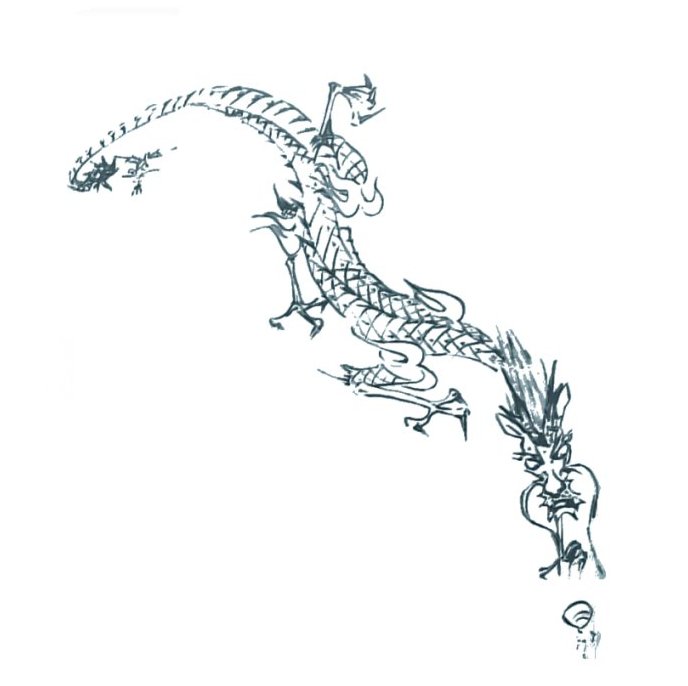
Every year, as part of our preparation for the annual Aikido Summer Camp, Kanai Sensei would spend time
drawing a custom design for that year’s commemorative T-shirt.
The design changed every year, resulting in a diverse collection spanning more than three decades.
On one occasion, the shirt featured a beautiful tsuba, reflecting Kanai Sensei’s deep knowledge of
swordsmanship and forging. Another year, it showcased his own unique Ai-Ki-Do calligraphy.
One particularly memorable design was a dragon—a complex creature with spikes, coiled in a circular motion,
that to my eyes looked quite fearsome.
Although I knew he always had a purpose, I remember wondering why he would put a dragon on
our Aikido T-shirt. His artwork, his choice of calligraphy or illustration typically stemmed from his extensive
study of history and art.
Hence, during a recent visit to the Museum of Fine Arts in Boston with Barbara Britton, I was fascinated
to see a similar dragon statue in the Japanese collection. It reminded me that Kanai Sensei had served as the
curator for the Museum’s Japanese swords—many of which were kept in the basement, away from public view.
Kanai Sensei loved visiting that Museum to study the paintings and the sword collection. He was a true martial
artist who possessed a refined understanding of both contemporary and historical art.
So, why the dragon? In Japanese mythology, dragons represent strength and resilience, embodying inner power and
triumph over adversity. They are regarded as benevolent kami (deities) of immense wisdom that bring about
spiritual growth and a balance between Heaven and Earth. Could this have been a reflection on the technique
Tenchi Nage—the "heaven and earth" throw?
Furthermore, dragon symbolism is often found on the ceilings of Buddhist temples and Shinto shrines, as dragons
are primarily water deities.
With these symbolic meanings in mind—the dragon as a protector, a guardian of water and rain, and a symbol of
self-discovery—perhaps Kanai Sensei was using his drawing to reflect on the role of Aikido in the world.
As we begin the New Year of 2026, I would like to conclude with two quotations.
The first is taken from an interview with Kanai Sensei during the 1989 Aikido camp in Banff, Canada. The current
Doshu Moriteru Ueshiba (then Waka Sensei) had been invited as a guest, and I was fortunate enough to attend.
During the camp, each Sensei shared reflections on nature, the beauty of Banff, and the essence of Aikido practice.
I found Kanai Sensei’s thoughts particularly poignant:
"The essence of Aikido is missing because students are just doing what looks beautiful. This is too easy...
It is true we must not clash. We must have harmony. That, however, becomes an easy way out of practicing Aikido as Budo,
and the most difficult part gets sacrificed. ‘Budo’—that’s where Aikido starts... That’s where you protect people’s Peace.
That’s the end point. That is where you get to after you have mastered the physical expression of Aikido Philosophy."
— Mitsunari Kanai, Banff, 1989.
The second quotation is from a letter by Tamura Sensei, who followed a tradition of writing a long, thoughtful message every
January 1st. I received the following in 1993:
"Try with all your might to become one of these beings who can spread warmth into the hearts of those around you,
because it will bring about well-being and Peace."
— Nobuyoshi Tamura, January 1st, 1993
My best wishes to everyone for a very Happy New Year 2026. May we all be able to meet soon and practice together
in the spirit of Aikido.
|
|
Art. 6
Outrageously strategic wishes for the new year
By Roxana Gramada,
5 dan Aikido Aikikai, Romania
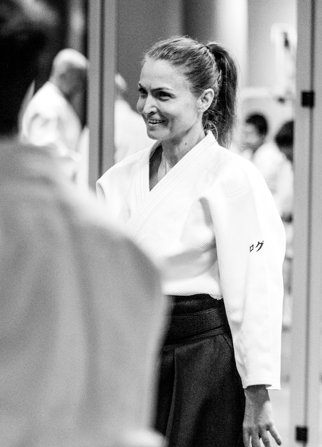
May you find and keep your good place to practice.
May your gi be fresh as you begin and soaking wet as the class ends.
May your beer always be cold.
And your detergent be effective.
May you share the passion with people so like you and so unlike you that you become bigger in the sharing.
May you be challenged.
And may you challenge others.
May the gods of joints show you mercy.
May you do that which holds, upholds, and brings you to perfection.
May you take original pictures on your annual trip to Japan.
May you see new things in old places.
May you find pressure and may your body know what to do.
May you make lots of money to spend on Aikido seminars.
May the laundromat always be open..
May your tatami be full.
And your mind empty.
May you go somewhere new this year and make new, lifelong friends.
May you open doors you’ve never opened and stand tall, sharp, and humble as you enter.
May you support others and may others root for you.
May you relax when told to.
May your posts get random love.
May you have questions and find your answers.
May your good deeds come back to hug you when you need it most.
May you know when to enter and when to surrender.
May you pick wisely and carry through.
May you flow.
And may you find stillness.
May you be where you are and know it.
May you become.
And may you pass it on.
|
|
Art. 7
33 years of Aikido
By Enrique Silvera
Technical Director, Asociación Samurai Aikido Kawai, Uruguay
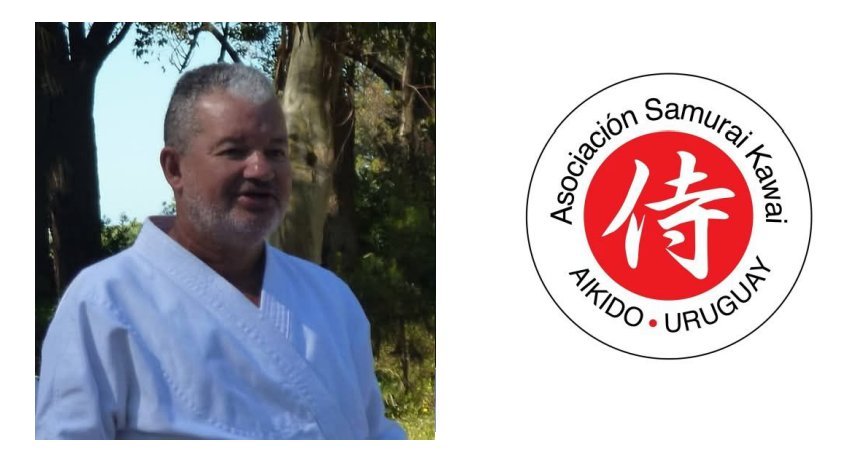
These 33 years as an Aikido instructor have been a profound and transformative journey.
Each student who stepped onto the mat left a mark, and together we built a space of respect, dedication, and growth.
I have shared not only techniques, but also values, moments of effort, self-improvement and harmony.
Aikido gave me a family in every dojo, and teaching became my way of giving thanks for everything this discipline has given me.
|
|
Art. 8
Teenage students' perspective on a Shihan's visit
By teenage students of
Asociación Samurai Aikido Kawai, Uruguay
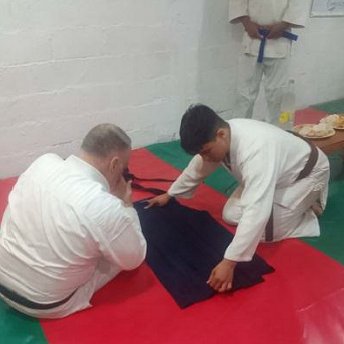 Martín Fernández – 1st kyu
In May 2025, we had the pleasure of a visit from Sensei Zimmermann in Uruguay,
which was a very special event for both us and the region. For me, this visit was
important for several reasons. Beyond the technical training, it was about learning
another aspect of Aikido when I had the pleasure of Sensei Zimmermann teaching me
the art of folding a hakama, helping me understand its importance and meaning for
Aikido practitioners.
 Aaron Pereira – 2nd kyu
Training Aikido with Sensei Zimmermann was a truly special experience.
From the very first moment, I felt respect, calm, and discipline in the atmosphere.
Every movement, every correction, and every lesson he taught me helped me understand
that Aikido is not just about technique, but also about inner balance and respect
for others.
 Mateo Bonifacino – 3rd kyu
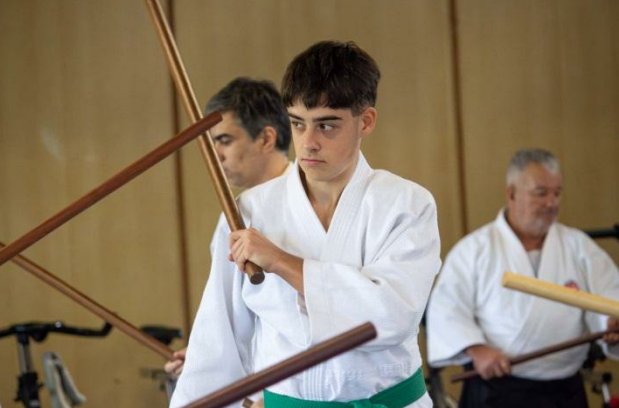
My experience at the seminar with Sensei Zimmermann was incredible.
At first, I was quite nervous because he commanded a lot of respect, and I didn't know
what he would be like. But in the end, he turned out to be a very calm and super kind person,
which made me feel much more comfortable. The seminar was a unique experience; I learned a lot
of things that I still try to apply every day, both in training and outside of it.
|
|
Art. 9
Book Corner: Technical Aikido
By Mitsunari Kanai Shihan, 8th Dan
Chief Instructor of New England Aikikai (1966-2004)
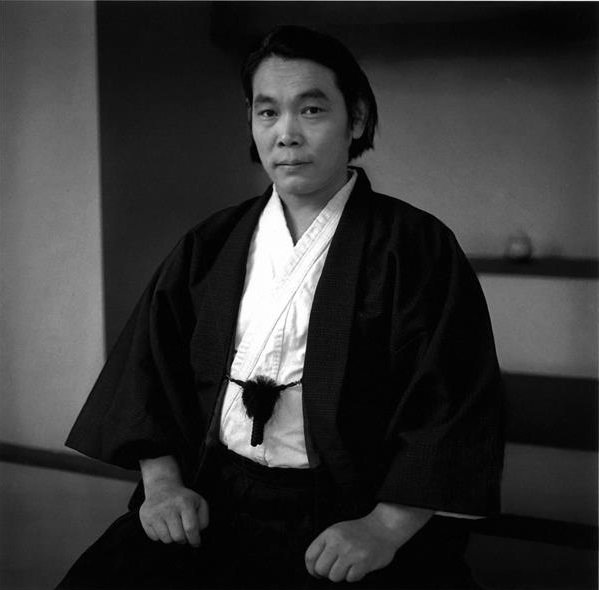
Editor's note: In this "Book Corner" we provide installments of books relevant to our practice.
Following is Chapter 5 of Mitsunari Kanai Shihan's book "Technical Aikido".
CHAPTER 5 - UKEMI - (Complete)
Since we have published this Chapter in five parts, which leads to fragmentation and separation of related concepts, we publish it here in its entirety.
CHAPTER 5 - UKEMI - (Part 1)
In this chapter, I will not address the complexity of defense in general; rather I will limit my discussion mainly to the relationship of Uke to Nage (the "other" or "partner") by focusing on how to fall and/or how to be thrown. Even in this limited examination, we must recognize several key issues.
First, one must understand the proper mental attitude appropriate to those who maintain and pursue the true form of "Bu" (martial arts). In developing the correct approach to ukemi, one must learn to master the ukemi techniques appropriate to any kind of waza (techniques) received from the Nage. This implies both receiving the full force of the Nage's technique, and also making the Nage's technique more refined or "polished".
Therefore one must understand these requirements while maintaining a serious attitude, as manifested in displaying correct manners to the Nage.
The following are simple descriptions of ukemi techniques; however, one must not forget that the basics of learning ukemi require one to practice executing all types of ukemi with a flexible body, a sharp mind, and an accurate judgment of the situation. Also it is essential to abandon an overly dependent relationship to the Nage; that is, a relationship based on a compromise of the principle that Uke and Nage are connected by a martial relationship.
There are several implications of this relationship. For example, Uke must not fall unless Nage's technique works. Also, Uke's technique must not depend on the assumption that the Nage will be kind, or that he will fail to exercise all his options, including kicking or striking the Uke if openings exist.
In training, one must polish one's own technique as well as the technique of one's partner, but at the same time one must maintain an attitude as serious and strict as if facing an enemy. This is the basis for a relationship that moves to higher levels based on a mutual commitment to polishing each partner's Aikido.
CHAPTER 5 - UKEMI - (Part 2)
Koho Kaiten Ukemi (Back Roll ukemi)
The basic requirements of Koho Kaiten ukemi are to be able to take a back roll without hurting yourself when being thrown, and further, to always recognize that the most dangerous element in a martial situation is the person whom you are confronting.
You must practice with the understanding that the bottom line of Bujutsu (martial arts) is to protect yourself from the opponent(s) in any circumstances and at any point in time. This imposes certain technical requirements on the techniques of ukemi.
Failing to understand these requirements can create disastrous consequences for the current practice of Aikido. One can observe this in a commonly seen way to do Koho Kaiten ukemi.
In this case, the Uke begins his Koho Kaiten by stepping back with the inside leg (i.e. the leg closest to the Nage), bending the knee until the knee is touching the floor (in a kneeling posture). The Uke then puts the buttocks down on the mat and first, rolls backward and then rolls forward while touching the same knee on the mat and, finally, stands up.
Doing the backward roll in this way shows an insufficient awareness of the acute dangers inherent in performing all these movements directly in front of the opponent. What are these dangers?
First, you must realize that stepping back with the inside leg means you are exposed to a kick. Furthermore, to lower the inside knee to the ground after stepping back in this way shows a potentially fatal carelessness due to the exposure to a kick, and also to the loss of mobility inherent in this position.
The error of putting down the knee before falling is compounded, after falling, by rolling forward and standing up directly in front of the opponent. This is proof that one is acting independently of the opponent and is in a relationship diametrically opposite to the martial situation, where one is completely involved with the opponent, and where one's actions, to be correct, must acknowledge, and be based on, this interdependence. (The only exception is when practice is restricted by space limitations of a Dojo.) Rolling back while kneeling down and putting down the buttock in front of the other is a position exposing "Shini-Tai" (a "dead body" or "defenseless body") and, therefore, is a position in which you are unable to protect yourself.
As long as Nage or Uke base their approach to practice on an independent relationship with each other, the assumptions underlying their practice will not be consistent with the assumptions of a martial situation. Because Aikido, as a martial art, is based on these (and other) assumptions, one cannot ignore them without compromising its essential nature. Nonetheless, many people have done exactly this, and are practicing an adulterated form which should not be called Aikido because it has been drained of its essential character as a martial art. Approached from such a perspective, Aikido becomes reduced to a barren play, in which one can never produce or grasp anything from the real Aikido.
Therefore, when taking ukemi, do not step back with the leg which is closest to the other! And, do not put down the knee when falling!
What then is the correct way to take Koho Kaiten ukemi? Basically, you must take a big step back with the outside leg and bend that knee without folding the foot so that the bottom of the foot continues to touch the mat. Then put down the same side buttock and do Koho Kaiten by rolling back over the inside shoulder, and then, after rolling over, stand up in Hanmi, take Ma-Ai and face the other.
Depending on the particular technique received from the Nage, it can be appropriate to roll back over the outside shoulder (while still stepping back with the outside leg).
In any event, to perform such correct ukemi, you must utilize the elastic power of the legs sufficiently. In Aikido, the "elastic power" (or "bending and stretching power") is a basic method utilized to produce power or to soften power received from an opponent. In the case of backward ukemi, for example, only by using the elastic power of the back leg after the back roll, can you create the momentum for standing up.
You must use the Achilles' tendon and the hamstring muscle (as well as all other muscles and tendons below' the hip) as a part of creating power when you are being thrown, just as you use them when you are throwing.
Zenpo Kaiten Ukemi (Front Roll Ukemi)
Step forward with the outside leg, i.e. the leg which is further away from the Nage. If, for example, the right leg is the outside leg, extend the right arm forward while pointing its fingers inward and curve the right arm. Then make the outside of the curved arm touch the mat smoothly and roll your entire body forward through, in order, the right shoulder, the curved back, and the left hip.
To complete the roll and rise to standing position, fold the left knee and position the right knee in a bent but upright position. Upon arriving at this one knee kneeling position, by using the momentum of the rolling, put your weight on the ball of the right foot and do Tenkan at the same time standing up and positioning yourself at Migi Hanmi to prepare for the next move. Complete the movement by taking a sufficient Ma-Ai which prepares for the next move of the opponent. Therefore, when one practices this Zenpo Kaiten movement the goal should be to make it low and far (i.e. lower in height and further in distance).
CHAPTER 5 - UKEMI - (Part 3)
Mae-ukemi (Break Fall) No.1
Step forward with the outside leg that is, the leg further away from the Nage (in this case the right leg). Spring with this leg as the pivot and do Zenpo Kaiten in the air. When landing on the mat, separate the body and arm so as to make a 45-degree angle between them and hit the floor first with the left arm in order to soften the impact on the rest of the body.
Then hit the mat simultaneously with the entire stretched left leg and the sole of the right foot and (the right instep and right knee are bent). At the instant the left leg and the right sole land on the mat, the upper body must be bent forward. (By this time, the elbow of the left arm, which hit the mat, must have already been bent and the left hand must have already supported the rising upper body.) Bending the upper body in this way is necessary to protect the internal organs from the impact.
It is important to keep the legs spread apart sufficiently because if the right knee cannot withstand the momentum generated by the impact and as a result collapses to the inside, the inside of the right knee must not hit the left leg.
Immediately after the left leg and the right foot land on the mat, using the momentum generated by the movement, twist the hip back to the right, and while standing up using the right knee as a pivot, do Tenkan with the left foot as the pivot and assume a Hidari Hanmi stance in order to be prepared for any move of the opponent.
Depending on which Nage waza (Throwing Technique) is employed, Zenpo Kaiten ukemi (Front Roll) may not be sufficient, and this is the ukemi which, in such a case, is necessary to protect one's self. It is like Zenpo Kaiten in some respects, but is different in others. You must learn the differences.
Train so that you can manage to do this ukemi flexibly when being thrown to the front, back, left or right.
CHAPTER 5 - UKEMI - (Part 4)
Mae-ukemi (Break Fall) No.2
This ukemi should be used when being thrown directly down by techniques such as Koshi Nage or Kata Guruma, and it is almost the same as Mae-ukemi No. 1. In case of taking ukemi on the left side of the body, land on the mat with the left arm, left leg and the right foot sole simultaneously, while lifting the back (from the left abdomen to the left armpit) from the mat to protect the internal organs. Also, pull the chin forward to prevent the head from striking the mat. Both the angle of the arm and body as they hit the mat, and the distance between both legs are the same as the previous Mae-ukemi. Train very thoroughly because one receives a very strong impact when taking this ukemi.
Both of the Mae-ukemi waza are ukemi waza based on uniting oneself instantaneously with the body of the opponent who initiated the waza by making one point of body contact the pivot point. The pivot point is that point on the Uke's body where Nage's power is most loaded (or placed) onto the Uke, or, conversely, the point of Nage's body where Uke's weight is most loaded onto the Nage.
The pivot point can move (within a range) in the course of a technique, but at all times it is the point of strongest contact between the Uke and Nage. Therefore, one needs to clearly understand which part of the opponent's body (the part which the opponent's power is directly put on) one must utilize for this purpose. The point of contact is generally the shoulder, elbow, or hip.
When one is thrown in the air, one must put one's body in the correct position in order to land safely. However, while one is in the air and not in contact with any object, it is difficult to move in any way, much less move accurately. Therefore, one must use the reactionary power of the throw itself, received through one point of contact with the opponent's body (usually shoulder, elbow, or hip), to provide sufficient force to propel one to a position where one's orientation is regained.
This happens in one instant, so Uke must rapidly and accurately determine which part of Nage's body he will use.
CHAPTER 5 - UKEMI - (Part 5)
Sokuto (Yoko-ukemi)
This ukemi should be used when being thrown down on one's side by Ashi Barai (Leg Sweep) or Okuri Iriminage.
In case of Hidari Hanmi (which would be the case if the left foot were the outside foot, i.e. the foot further away from the Nage), a moment before the left side of the body lands on the mat, one must hit the mat quickly with the stretched left arm, which is extended away from the body (maintaining an approximately 20 degree angle between the body and the arm), and shift the body's position so that the part of the body that lands first is the left part of the hip, and the part of the body that lands later is the upper left of the body. The instant the left hip lands on the mat, stretch both legs and kick them upward (twisting to the right front side of the body). This movement controls the balance of the body and prevents the left side of the body from receiving an abrupt and injurious impact.
Much training is required in order to hit the mat quickly and strongly with the extended arm, because in this case, one arm alone absorbs nearly all the impact received by the entire body.
The way of standing up is the same with Ma-ukemi.
There are also other ukemi such as Zenpo (Front Fall) or Koho (Back Fall) which are done when rolling is not possible due to insufficient space or other physical limitations. I would like to explain about these in the future.
It is necessary that one know when and how to do all types of ukemi. Just as Nage is required absolutely to make a posture based on the principle of reactionary power, Uke also must do ukemi based on the principle of reactionary power.
In other words, one must make sufficient use of the sources of reactionary power, which results from putting power on anything that has weight. For example, reactionary power would include the Nage's power, a part of the body, and the mat. Thus one can control one's own body. Unless one understands this principle, ukemi as practiced will never be the true ukemi.
You must practice until you are convinced that even when the power of an opponent is imposed on you with maximum force, if you can use the opponent's body in the correct way, you will be able to take the safest and most correct ukemi.
When one is being thrown, the power of the other is always imposed on a particular part of one's body. One must do ukemi either by utilizing the power which is imposed on oneself as the reactionary power, or by using the contact point between the other and oneself as a source for reactionary power.
Therefore, do not start your ukemi by "jumping" rashly in advance of the Nage's throw. Do not decide which to do, Ma or Kaiten-ukemi, before being thrown. Adapt oneself to the circumstances instantaneously and let the Nage's technique determine which you take. This approach must be thought through carefully and then consistently applied to practice.
CHAPTER 5 - UKEMI - (Complete)
(this goes above)Since we have published this Chapter in five parts, which leads to fragmentation and separation of related concepts,
we publish it here in its entirety.
CHAPTER 5 - UKEMI
In this chapter, I will not address the complexity of defense in general; rather I will limit my discussion mainly to the relationship of Uke to Nage (the "other" or "partner") by focusing on how to fall and/or how to be thrown. Even in this limited examination, we must recognize several key issues.
First, one must understand the proper mental attitude appropriate to those who maintain and pursue the true form of "Bu" (martial arts). In developing the correct approach to ukemi, one must learn to master the ukemi techniques appropriate to any kind of waza (techniques) received from the Nage. This implies both receiving the full force of the Nage's technique, and also making the Nage's technique more refined or "polished".
Therefore one must understand these requirements while maintaining a serious attitude, as manifested in displaying correct manners to the Nage.
The following are simple descriptions of ukemi techniques; however, one must not forget that the basics of learning ukemi require one to practice executing all types of ukemi with a flexible body, a sharp mind, and an accurate judgment of the situation. Also it is essential to abandon an overly dependent relationship to the Nage; that is, a relationship based on a compromise of the principle that Uke and Nage are connected by a martial relationship.
There are several implications of this relationship. For example, Uke must not fall unless Nage's technique works. Also, Uke's technique must not depend on the assumption that the Nage will be kind, or that he will fail to exercise all his options, including kicking or striking the Uke if openings exist.
In training, one must polish one's own technique as well as the technique of one's partner, but at the same time one must maintain an attitude as serious and strict as if facing an enemy. This is the basis for a relationship that moves to higher levels based on a mutual commitment to polishing each partner's Aikido.
Koho Kaiten Ukemi (Back Roll ukemi)
The basic requirements of Koho Kaiten ukemi are to be able to take a back roll without hurting yourself when being thrown, and further, to always recognize that the most dangerous element in a martial situation is the person whom you are confronting.
You must practice with the understanding that the bottom line of Bujutsu (martial arts) is to protect yourself from the opponent(s) in any circumstances and at any point in time. This imposes certain technical requirements on the techniques of ukemi.
Failing to understand these requirements can create disastrous consequences for the current practice of Aikido. One can observe this in a commonly seen way to do Koho Kaiten ukemi.
In this case, the Uke begins his Koho Kaiten by stepping back with the inside leg (i.e. the leg closest to the Nage), bending the knee until the knee is touching the floor (in a kneeling posture). The Uke then puts the buttocks down on the mat and first, rolls backward and then rolls forward while touching the same knee on the mat and, finally, stands up.
Doing the backward roll in this way shows an insufficient awareness of the acute dangers inherent in performing all these movements directly in front of the opponent. What are these dangers?
First, you must realize that stepping back with the inside leg means you are exposed to a kick. Furthermore, to lower the inside knee to the ground after stepping back in this way shows a potentially fatal carelessness due to the exposure to a kick, and also to the loss of mobility inherent in this position.
The error of putting down the knee before falling is compounded, after falling, by rolling forward and standing up directly in front of the opponent. This is proof that one is acting independently of the opponent and is in a relationship diametrically opposite to the martial situation, where one is completely involved with the opponent, and where one's actions, to be correct, must acknowledge, and be based on, this interdependence. (The only exception is when practice is restricted by space limitations of a Dojo.) Rolling back while kneeling down and putting down the buttock in front of the other is a position exposing "Shini-Tai" (a "dead body" or "defenseless body") and, therefore, is a position in which you are unable to protect yourself.
As long as Nage or Uke base their approach to practice on an independent relationship with each other, the assumptions underlying their practice will not be consistent with the assumptions of a martial situation. Because Aikido, as a martial art, is based on these (and other) assumptions, one cannot ignore them without compromising its essential nature. Nonetheless, many people have done exactly this, and are practicing an adulterated form which should not be called Aikido because it has been drained of its essential character as a martial art. Approached from such a perspective, Aikido becomes reduced to a barren play, in which one can never produce or grasp anything from the real Aikido.
Therefore, when taking ukemi, do not step back with the leg which is closest to the other! And, do not put down the knee when falling!
What then is the correct way to take Koho Kaiten ukemi? Basically, you must take a big step back with the outside leg and bend that knee without folding the foot so that the bottom of the foot continues to touch the mat. Then put down the same side buttock and do Koho Kaiten by rolling back over the inside shoulder, and then, after rolling over, stand up in Hanmi, take Ma-Ai and face the other.
Depending on the particular technique received from the Nage, it can be appropriate to roll back over the outside shoulder (while still stepping back with the outside leg).
In any event, to perform such correct ukemi, you must utilize the elastic power of the legs sufficiently. In Aikido, the "elastic power" (or "bending and stretching power") is a basic method utilized to produce power or to soften power received from an opponent. In the case of backward ukemi, for example, only by using the elastic power of the back leg after the back roll, can you create the momentum for standing up.
You must use the Achilles' tendon and the hamstring muscle (as well as all other muscles and tendons below' the hip) as a part of creating power when you are being thrown, just as you use them when you are throwing.
Zenpo Kaiten Ukemi (Front Roll Ukemi)
Step forward with the outside leg, i.e. the leg which is further away from the Nage. If, for example, the right leg is the outside leg, extend the right arm forward while pointing its fingers inward and curve the right arm. Then make the outside of the curved arm touch the mat smoothly and roll your entire body forward through, in order, the right shoulder, the curved back, and the left hip.
To complete the roll and rise to standing position, fold the left knee and position the right knee in a bent but upright position. Upon arriving at this one knee kneeling position, by using the momentum of the rolling, put your weight on the ball of the right foot and do Tenkan at the same time standing up and positioning yourself at Migi Hanmi to prepare for the next move. Complete the movement by taking a sufficient Ma-Ai which prepares for the next move of the opponent. Therefore, when one practices this Zenpo Kaiten movement the goal should be to make it low and far (i.e. lower in height and further in distance).
Mae-ukemi (Break Fall) No.1
Step forward with the outside leg that is, the leg further away from the Nage (in this case the right leg). Spring with this leg as the pivot and do Zenpo Kaiten in the air. When landing on the mat, separate the body and arm so as to make a 45-degree angle between them and hit the floor first with the left arm in order to soften the impact on the rest of the body.
Then hit the mat simultaneously with the entire stretched left leg and the sole of the right foot and (the right instep and right knee are bent). At the instant the left leg and the right sole land on the mat, the upper body must be bent forward. (By this time, the elbow of the left arm, which hit the mat, must have already been bent and the left hand must have already supported the rising upper body.) Bending the upper body in this way is necessary to protect the internal organs from the impact.
It is important to keep the legs spread apart sufficiently because if the right knee cannot withstand the momentum generated by the impact and as a result collapses to the inside, the inside of the right knee must not hit the left leg.
Immediately after the left leg and the right foot land on the mat, using the momentum generated by the movement, twist the hip back to the right, and while standing up using the right knee as a pivot, do Tenkan with the left foot as the pivot and assume a Hidari Hanmi stance in order to be prepared for any move of the opponent.
Depending on which Nage waza (Throwing Technique) is employed, Zenpo Kaiten ukemi (Front Roll) may not be sufficient, and this is the ukemi which, in such a case, is necessary to protect one's self. It is like Zenpo Kaiten in some respects, but is different in others. You must learn the differences.
Train so that you can manage to do this ukemi flexibly when being thrown to the front, back, left or right.
Mae-ukemi (Break Fall) No.2
This ukemi should be used when being thrown directly down by techniques such as Koshi Nage or Kata Guruma, and it is almost the same as Mae-ukemi No. 1. In case of taking ukemi on the left side of the body, land on the mat with the left arm, left leg and the right foot sole simultaneously, while lifting the back (from the left abdomen to the left armpit) from the mat to protect the internal organs. Also, pull the chin forward to prevent the head from striking the mat. Both the angle of the arm and body as they hit the mat, and the distance between both legs are the same as the previous Mae-ukemi. Train very thoroughly because one receives a very strong impact when taking this ukemi.
Both of the Mae-ukemi waza are ukemi waza based on uniting oneself instantaneously with the body of the opponent who initiated the waza by making one point of body contact the pivot point. The pivot point is that point on the Uke's body where Nage's power is most loaded (or placed) onto the Uke, or, conversely, the point of Nage's body where Uke's weight is most loaded onto the Nage.
The pivot point can move (within a range) in the course of a technique, but at all times it is the point of strongest contact between the Uke and Nage. Therefore, one needs to clearly understand which part of the opponent's body (the part which the opponent's power is directly put on) one must utilize for this purpose. The point of contact is generally the shoulder, elbow, or hip.
When one is thrown in the air, one must put one's body in the correct position in order to land safely. However, while one is in the air and not in contact with any object, it is difficult to move in any way, much less move accurately. Therefore, one must use the reactionary power of the throw itself, received through one point of contact with the opponent's body (usually shoulder, elbow, or hip), to provide sufficient force to propel one to a position where one's orientation is regained.
This happens in one instant, so Uke must rapidly and accurately determine which part of Nage's body he will use.
Sokuto (Yoko-ukemi)
This ukemi should be used when being thrown down on one's side by Ashi Barai (Leg Sweep) or Okuri Iriminage.
In case of Hidari Hanmi (which would be the case if the left foot were the outside foot, i.e. the foot further away from the Nage), a moment before the left side of the body lands on the mat, one must hit the mat quickly with the stretched left arm, which is extended away from the body (maintaining an approximately 20 degree angle between the body and the arm), and shift the body's position so that the part of the body that lands first is the left part of the hip, and the part of the body that lands later is the upper left of the body. The instant the left hip lands on the mat, stretch both legs and kick them upward (twisting to the right front side of the body). This movement controls the balance of the body and prevents the left side of the body from receiving an abrupt and injurious impact.
Much training is required in order to hit the mat quickly and strongly with the extended arm, because in this case, one arm alone absorbs nearly all the impact received by the entire body.
The way of standing up is the same with Ma-ukemi.
There are also other ukemi such as Zenpo (Front Fall) or Koho (Back Fall) which are done when rolling is not possible due to insufficient space or other physical limitations. I would like to explain about these in the future.
It is necessary that one know when and how to do all types of ukemi. Just as Nage is required absolutely to make a posture based on the principle of reactionary power, Uke also must do ukemi based on the principle of reactionary power.
In other words, one must make sufficient use of the sources of reactionary power, which results from putting power on anything that has weight. For example, reactionary power would include the Nage's power, a part of the body, and the mat. Thus one can control one's own body. Unless one understands this principle, ukemi as practiced will never be the true ukemi.
You must practice until you are convinced that even when the power of an opponent is imposed on you with maximum force, if you can use the opponent's body in the correct way, you will be able to take the safest and most correct ukemi.
When one is being thrown, the power of the other is always imposed on a particular part of one's body. One must do ukemi either by utilizing the power which is imposed on oneself as the reactionary power, or by using the contact point between the other and oneself as a source for reactionary power.
Therefore, do not start your ukemi by "jumping" rashly in advance of the Nage's throw. Do not decide which to do, Ma or Kaiten-ukemi, before being thrown. Adapt oneself to the circumstances instantaneously and let the Nage's technique determine which you take. This approach must be thought through carefully and then consistently applied to practice.
Technical Aikido © Mitsunari Kanai 1994-96
|
|
Comic10
Comics - Aikido Animals: The Slow
By Jutta Bossert
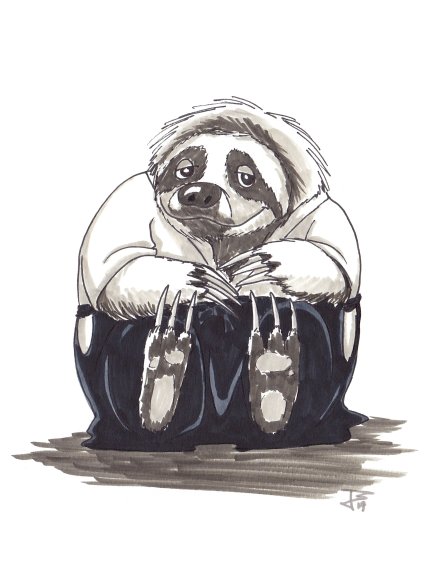
The Slow
They don't like to hurry.
They do things slowly and thoughtfully.
The longer the seminar goes on,
the slower they get
and the longer it takes them to get up again.
© Jutta Bossert - Used by permission.
|
|
Art. 11
Back to what we love!
By Maykell Torres
Dojo-cho, Aikido Fujisan Dojo, Venezuela
Dear Shin Kaze community! We want to share our two cents contributed to this
dojo reopening experience, now in Caracas. It has been a very interesting few months
that have broadened our perspective on the work done and how much remains to be done.
The Reopening
On May 7th of this year, 2025, we opened the dojo at the National Art Gallery in Bellas Artes,
right in the heart of Caracas' cultural center, with a social media advertising campaign that
generated a database of almost 200 people. About 40 people were scheduled for the opening class,
and we managed to get around 20 people to attend the class, including children, teenagers,
and adults.
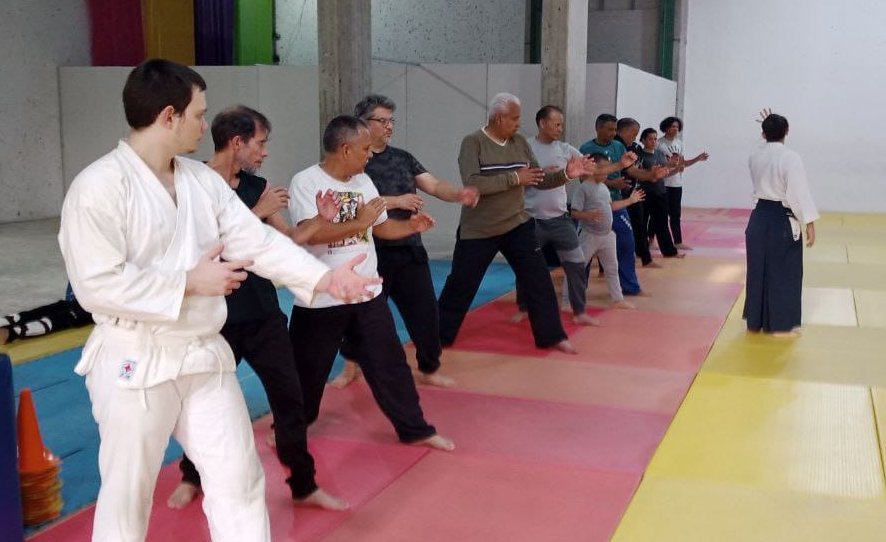
From the following classes, a group of about 10 people formed, which was gradually narrowed
down over the following weeks until a core group of 3 people remained (current sempais of the dojo).
In August, anticipating school holidays in Caracas, we decided to try a new campaign focused on
children and the issue of bullying. We managed to attract a group of about 10 children along with
their parents and guardians. This group lasted only about 2 months. As the holiday season ended,
the children began to stop attending classes, and none of them remained from this campaign.
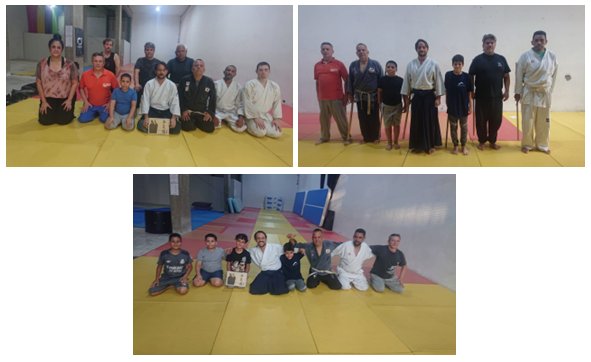
On September 26th, we celebrated the dojo's birthday and my own,
where my Sensei, Jorge Russo, led the class with several of his students from Marubashi Aikido Dojo.
After the class, we went to celebrate at the café next door and enjoyed a pleasant time together as
the Marubashi-Fujisan family.
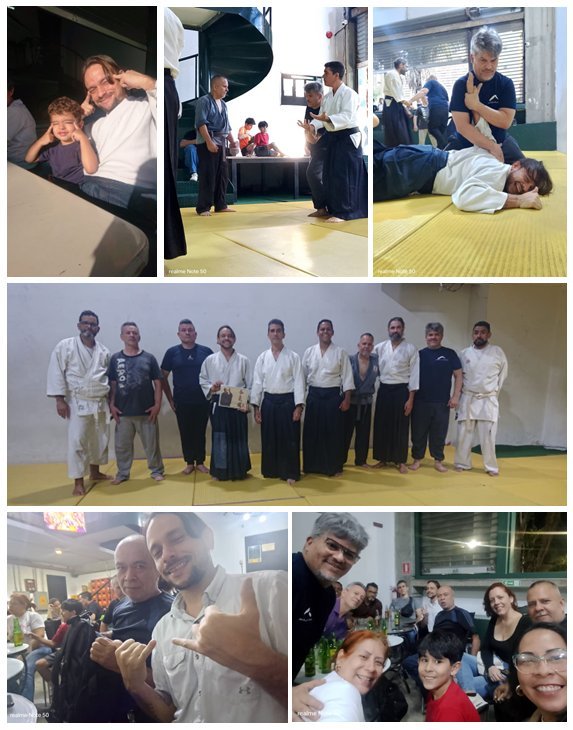
During the first days of October, I was fortunate enough to attend a seminar organized by
Aikido Kokyu Ho Dojo at the UCV in Maracay, with excellent classes taught by the Senseis:
Yovany Lobo, Henry Bellorin, Aneida González, and, of course, the host, Sensei Rafael Pacheco.
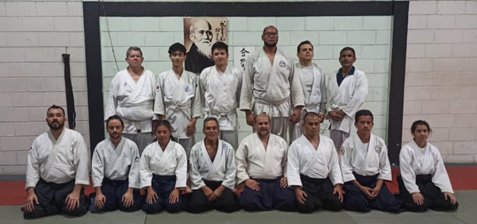
In these last few months of the year, we decided to refocus with a new advertising campaign
targeting young people and adults with a well-defined profile and aiming to maintain a minimum enrollment of
10 students. This campaign is currently underway as I write these words.
In our one-hour classes, which for the moment are only twice a week, on Wednesdays and Fridays,
we have been teaching the basics and fundamentals of Aikido practice (ukemi, tai sabaki,
ma ai, kusushi, kamae, etc.) along with basic 6th and 5th kyu techniques, as well as the
first suburis of bokken and jo. We have also held a couple of Iaijutsu classes so that
our students understand from the beginning the relationship between weapons and
taijutsu (Riai) work, while simultaneously training their bodies with new movements.
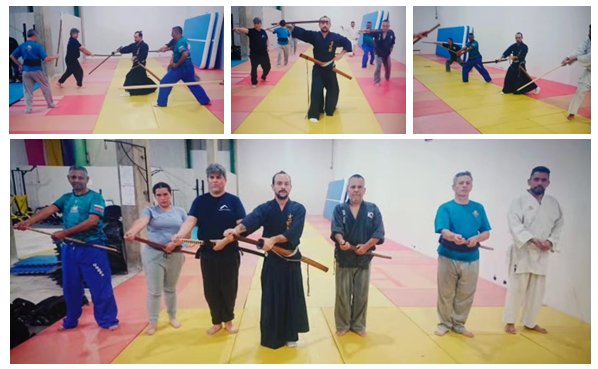
Returning to the topic of the ups and downs in the number of students at the dojo, several things
can be observed. Many of these data points are perhaps already known to dojo cho
with years of experience working in their schools.
Many people are interested in posting on social media, but very few are truly interested and have
the necessary time, budget, and genuine motivation to take the step of visiting the dojo and trying the
classes. And of these few who visit the dojo, only a select group will remain,
and only time will tell about their commitment to the discipline on the path of Aikido.
“Many are called, but few are chosen.”
Based on this information, the topic arises of analyzing Aikido practitioners worldwide, how the number
of students has declined in recent years, and finally, how we, the dojo cho, can increase this population,
especially among the younger generations who will be the next generation to maintain Aikido through time
with future generations.
From my perspective, based on my experience in these short months with the dojo in Caracas, and
with the aim of spreading the art and attracting new practitioners, I can highlight that the
following should be done:
- Invest in social media advertising campaigns with a well-defined audience, aiming to attract people with the average Aikidoist profile.
- Interact daily on social media.
- Invest in promotional materials to position the dojo's brand (such as dojo T-shirts, caps, keychains, water bottles, etc.).
- Encourage current students to invite people to the dojo with the agreement that if their referrals enroll, they will receive a free month of practice as a reward.
- Find class times that best fit the daily routines of potential new students.
- Go beyond daily dojo practice and organize outdoor training sessions, preferably in nature ("Yagai Geiko").
- Seek contacts to bring Aikido to companies and schools through workshops on various topics.
- Look for ways to have Aikido demonstrations at local festivals and sporting events such as martial arts tournaments.
- Recommend the classes daily using the best advertising: word of mouth, due to its high credibility and organic reach.
To conclude this note, I want to share that yesterday, November 19, 2025, was truly a very pleasant day for us,
as it generated a chain reaction of very good news, starting with the recognition of Hombu Dojo by Shin Kaze,
continuing with the recognition of Aikido Fujisan as a full member of Shin Kaze, and ending with the enrollment
of two new students in our dojo (a result of the social media advertising campaign we are currently running).
Definitely a day to celebrate in Tokyo, Toronto, and Caracas!
Thanks to the entire Shin Kaze Aikido Alliance community, and I'm always open to learning and sharing new techniques,
not only in Aikido, but also on how to attract new prospects and keep current students motivated.
Please feel free to email me or contact me directly via WhatsApp. The idea is to spread Aikido and work to maintain what we love!
|
|
Art. 12
Dojos granted Full and Provisional Member status
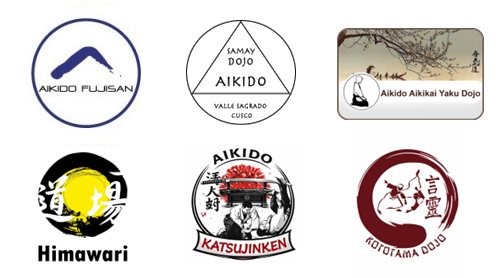
We are pleased to announce that the following dojo has been granted Full Member status:
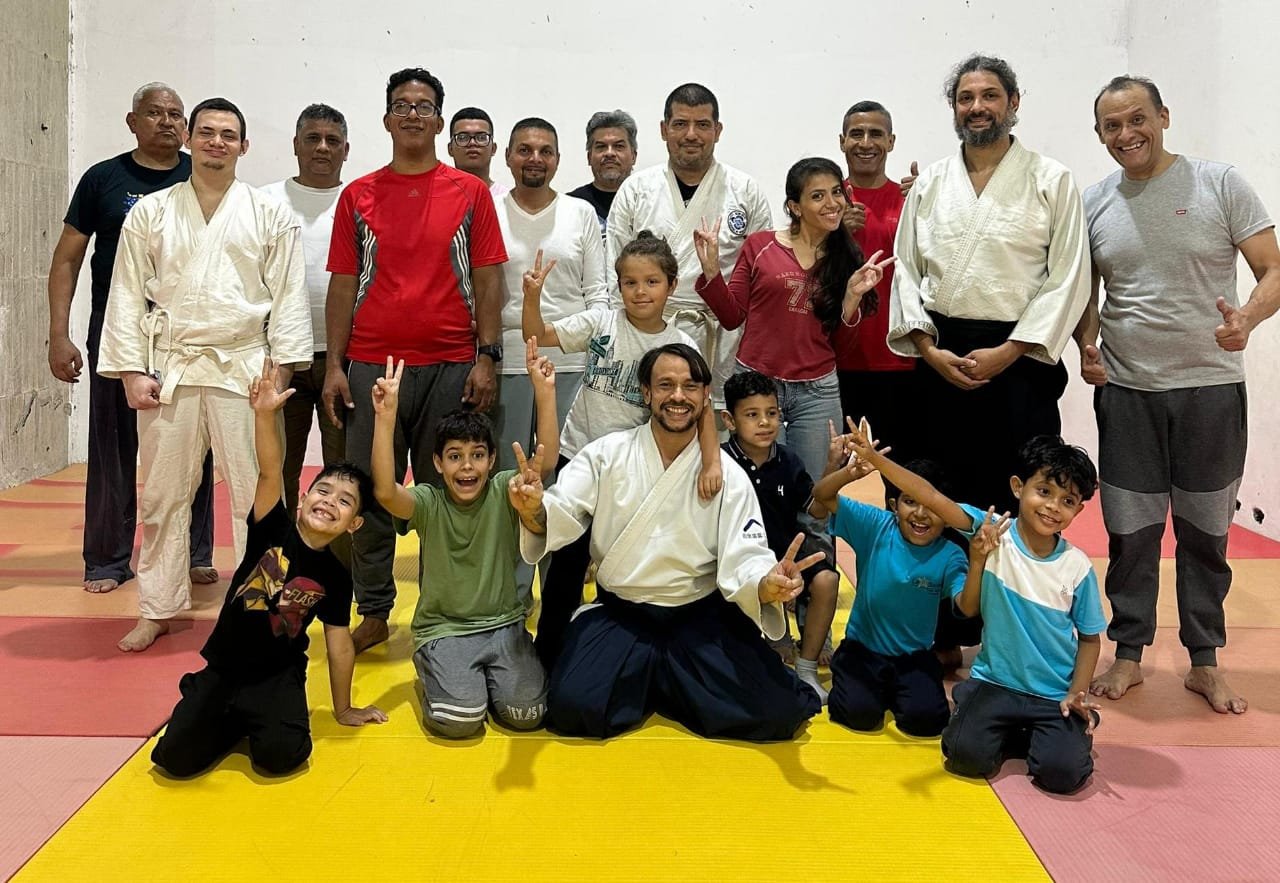
- Aikido Fujisan Dojo, located in the city of Caracas, Venezuela, led by dojo-cho Maykell Torres, sandan.
We are also pleased to announce that the following dojos — all under the supervision of
Miguel Morales Bermúdez Shihan, shichidan, director of the Asociación Morihei Ueshiba del Perú
and dojo-cho of Aikido Perú Niji Dojo, a Shin Kaze Full Member dojo in Lima — have been granted
Provisional Member status:
- Samay Dojo, located in the Province of Urubamba, in the Cusco Region, Perú, led by dojo-cho Carola Robles, yondan.
- Aikido Aikikai Yaku Dojo, located in the district of Lince in the city of Lima, Perú, led by dojo-cho Juan Carlos Flores, yondan.
- Dojo Himawari, located in the district of San Miguel, in the city of Lima, Perú, led by dojo-cho Juan Carlos Delgado Velasquez, yondan.
- Katsujinken, located in Girona, Spain, led by dojo-cho Javier Raa, yondan.
- Kototama Dojo, located in Province of Calca, in the Cusco Region, Perú, led by dojo-cho Jorge Campos, sandan.
A warm welcome to all!
|
|
Art. 13
From Mukyu to Yonkyu: An Educational Journey
By Rafael Pacheco Shidoin
Dojo-cho Venezuela Aikido Kokyu Ho Dojo, Maracay, Venezuela
Introduction: The first step is not technical, it's human.
When students first cross the threshold of an Aikido dojo, they don't bring questions about ikkyō or iriminage.
What they bring is a deeper restlessness: the search for balance, for discipline, for a sense of purpose lost in
the whirlwind of the outside world. At that moment, the tatami becomes a living classroom, not for combat, but
for transformation.
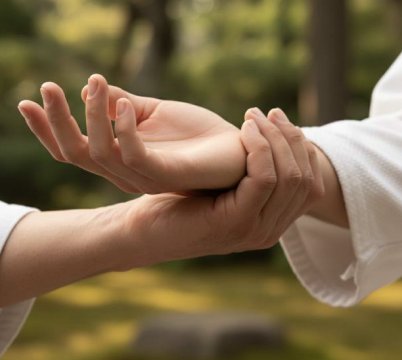
The transition from mukyu, the rankless beginner, to yonkyu, the fourth kyu, where the understanding of the art
begins to solidify, is not merely a technical progression. It is a structured, sensitive, and profoundly human
pedagogical journey. In this article, we will explore that evolution in light of great thinkers in education,
whose voices, though distant in time, resonate clearly in every fall, every turn, and every bow of the practitioner.
Mukyu: The body that feels before it understands
In the first few months, the new student doesn't need theory; they need to experience Aikido.
This is where Jean-Jacques Rousseau finds his purest echo. He maintains that authentic learning
arises from direct experience, not from premature abstraction.
Thus, the mukyu should not be taught what ma-ai is or why one turns in tenkan; they are invited
to walk, to fall, to get up, to touch the ground with open palms, to feel the weight of
the other in a katatedori. Knowledge is built from the skin, from the vertigo of a
controlled fall, from the surprise of discovering that balance does not reside in strength,
but in intention.
The Dojo, at this stage, is a naturalized space: without judgment, without haste, where mistakes
are not failures, but information. The beginner's body—clumsy, rigid, fearful—opens like a bud
that needs time, light, and space to unfold. Perfection is not demanded, but presence.
The architecture of learning: from simple to complex
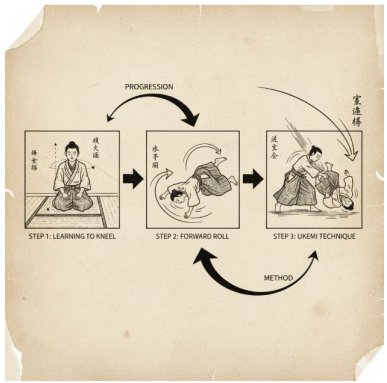
 As the body becomes accustomed to movement, the ordered and universal vision of John Amos Comenius
comes into play. In his Didactica Magna, Comenius proposes that “everything should be taught to everyone”
and that knowledge should be organized “from the simple to the complex, from the concrete to the abstract.”
This maxim is translated on the tatami with almost mathematical precision.
As the body becomes accustomed to movement, the ordered and universal vision of John Amos Comenius
comes into play. In his Didactica Magna, Comenius proposes that “everything should be taught to everyone”
and that knowledge should be organized “from the simple to the complex, from the concrete to the abstract.”
This maxim is translated on the tatami with almost mathematical precision.
First, the falls are taught: yoko ukemi (side fall), then mae ukemi (roll), and finally ushiro ukemi (back fall).
Each one builds upon the previous one, ensuring that the student not only survives physically, but also gains
confidence in their ability to receive the world without breaking. Simultaneously, the footwork—irimi, tenkan,
tai sabaki—is introduced individually, as fundamental building blocks, before being assembled into complete
techniques.
Comenius also insisted on the need for a natural order in teaching. Thus, shihonage is not taught before the
student has mastered ikkyō; fluency in hanmi handachi waza is not demanded without stability in tachiwaza.
Each technique is a link in a carefully woven pedagogical chain, where nothing is skipped, nothing is improvised.
The pedagogical triad: Head, Heart and Hand on the tatami
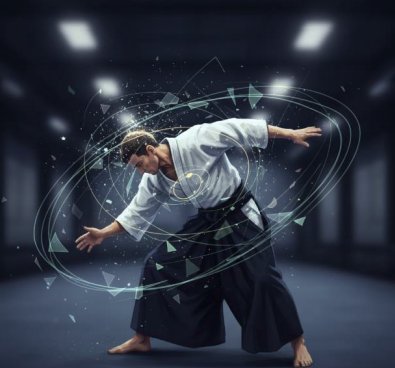
 Reaching Yonkyu is not simply a matter of repeating movements. This is where Johann Pestalozzi's
pedagogical intuition shines brightly. For him, true education integrates Head, Heart, and Hand —
thought, feeling, and action. In the language of Aikido, this translates directly to Shin-Gi-Tai:
Spirit, Technique, and Body.
Reaching Yonkyu is not simply a matter of repeating movements. This is where Johann Pestalozzi's
pedagogical intuition shines brightly. For him, true education integrates Head, Heart, and Hand —
thought, feeling, and action. In the language of Aikido, this translates directly to Shin-Gi-Tai:
Spirit, Technique, and Body.
A yonkyu exam is not passed with muscle power or motor memory alone. It is passed when the student manages
to make their mind understand the intention of the technique (gi), their body execute it with economy and
precision (tai), and their spirit perform it with humility, respect, and presence (shin).
It is not enough to apply nikkyo with force; it must be done with compassion. It is not enough to be
well-liked; it must be done with generosity towards one's partner. Pestalozzi, in his defense of a holistic
education, anticipated what we see today on the tatami: the formation of the whole human being, not the
isolated technician.
The thinking body: Assimilation and accommodation in motion
Jean Piaget, with his constructivist theory, offers us a powerful lens through which to understand
the student's "mistakes." For Piaget, learning occurs when the individual assimilates a new experience
into their existing schemas or, when this is not possible, adapts their schemas to integrate the new information.
On the tatami, this is palpably evident. Imagine a student who has practiced ikkyō against katatedori. When
presented with ikkyō against shomenuchi, their original strategy falters. The attack is faster, less predictable.
The first reaction is to force the old pattern—to assimilate it—but it fails.
Only after several repetitions, after listening to the body and adjusting their posture, entry, and control,
do they manage to accommodate their understanding.
The same applies to iriminage: the practitioner must reconfigure their perception of space, time, and the other.
Each technique is a cognitive-bodily challenge that demands internal reorganization. Aikido, seen in this way,
is not a collection of movements, but a laboratory for constructing kinesthetic thinking.
Beyond Repetition: Body Dialogue and Critical Awareness
 However, if teaching is reduced to mechanical imitation—the sensei demonstrates, the student repeats—we
fall into what Paulo Freire denounced as “banking education”: the teacher deposits knowledge into the passive student.
Aikido, in its essence, rejects this logic. It is not about accumulating techniques, but about engaging in a dialogue
with movement.
However, if teaching is reduced to mechanical imitation—the sensei demonstrates, the student repeats—we
fall into what Paulo Freire denounced as “banking education”: the teacher deposits knowledge into the passive student.
Aikido, in its essence, rejects this logic. It is not about accumulating techniques, but about engaging in a dialogue
with movement.
In a living dojo, the sensei doesn't impose; he invites. He poses questions about the body:
"What happens if you turn a little later?"
"How do you feel if your hara remains centered?"
"How does the technique change if your intention is to protect, not dominate?"
The student doesn't blindly repeat; he experiments, compares, and chooses.
Thus, the tatami becomes a space of liberating education, where the student not only obeys, but also discovers their
own technical and ethical voice. True progress is not measured by how many times shihonage has been performed,
but by how much awareness has been gained in doing so.
Conclusion: Towards the horizon of the black belt
The journey from mukyu to yonkyū is only the prologue to the book of Aikido.
But it is an essential prologue: it is where the roots of respect, humility, curiosity, and conscious discipline are sown.
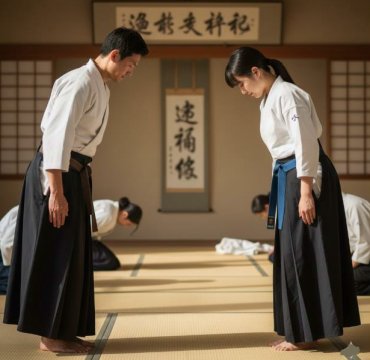 One who reaches yonkyu is no longer a mere visitor to the Dojo; they are a committed student,
capable of sustaining a practice with increasing depth. From here, the path becomes more demanding, more subtle, more internal.
Techniques become less important than intention; the kyu ranks are merely markers on the path to shodan, where,
paradoxically, true learning begins.
One who reaches yonkyu is no longer a mere visitor to the Dojo; they are a committed student,
capable of sustaining a practice with increasing depth. From here, the path becomes more demanding, more subtle, more internal.
Techniques become less important than intention; the kyu ranks are merely markers on the path to shodan, where,
paradoxically, true learning begins.
As educators and as practitioners of Aikido, our responsibility is not to produce belts, but to develop well-rounded
human beings, capable of harmonizing with the world without losing their center. And in this noble purpose, the tatami
remains, as it always has been, the wisest classroom.
|
|
Art. 14
Reflections on my experience as a young Aikido student
By Sarina Kobayashi
Yonkyu, Toronto Aikikai, Toronto, Canada
I am a 16-year-old aikidoka at Toronto Aikikai. This is my fourth year practicing Aikido,
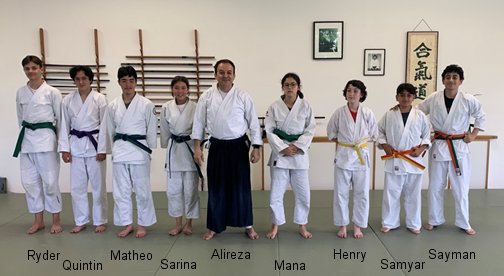
and I have recently graduated to yonkyu alongside two of my friends, Matheo and Ryder.
Around four years ago, I joined the youth class. I was really nervous to start, but as I continued
attending classes, I began to fall in love with the art. The connections, the idea of harmonizing energy,
and the absence of violent intent, typically common in other martial arts, drew me to the art.
It took me a while to get a hold of all the techniques, but I managed to progress quite quickly through
the youth levels. Being taught by a variety of different Senseis and seeing all their different teaching
styles made my Aikido experience enjoyable and engaging. I learned many different variations of certain
techniques, as well as different forms of warm-ups. The warm-ups that I most enjoyed were those done in
the youth class. We would do different forms of army crawls across the mats, break falls over the shinai,
running, and wheelbarrow walks. Not only were these warm-ups fun, but they also challenged us and helped
improve our technique. Now that I have been helping teach the children’s class, I can use my experiences
in the youth class to help teach the little ones as well.
Furthermore, Aikido has played a large role in my cultural identity. Being half-Japanese, practicing the
art has allowed me to keep in touch with my culture. I joined Aikido soon after my father passed away,
and practicing Aikido allowed me to stay connected with him. My father practiced Aikido as a young adult
and reached the dan level ranks. I feel motivated by him to continue progressing in Aikido, and also feel
that when I practice Aikido, my dad is there with me, watching me, and cheering me on.
This past year, I had the opportunity to begin attending adult classes. This opened up a whole new world
of Aikido for me. The classes were a lot more challenging and had more advanced techniques. I remember
when I first saw Sensei performing koshinage, my mind basically exploded. I thought: “How is that even
possible!” But when I actually tried it, I realised that it wasn’t impossible. Don’t get me wrong, I still
can’t do it perfectly, and the technique continues to baffle me, but I am a lot more confident in these
types of advanced techniques now, compared to when I first joined. As I continue progressing through the
adult levels, I am excited to learn new techniques and work on perfecting the ones that I already know,
as well as having fun while doing it.
どうもありがとうございました, 合気道がんばってね〜
Thank you very much, good luck with Aikido!
|
|
Art. 15
Things I learned during my early years in Aikido
By Matheo Aublant
Yonkyu, Toronto Aikikai, Toronto, Canada
My name is Matheo, and I have recently been promoted to 4th kyu, alongside my fellow aikidoka Sarina and Rider.
When I first joined Toronto Aikikai in 2018 with my brother, I started in the children class. These classes
are the source of my passion for Aikido, as it is there where I learned the basics, such as safe ukemi,
all the while having fun with games. One of my earliest memories at the dojo was a Sunday class with Otto, our instructor,
where few kids showed up. Before the class, as my brother was clinging onto his leg, Otto showed us how he
could free himself using just a jo. Although not true Aikido, this completely encompasses the Aikido philosophy
of resolving a confrontation while minimizing the harm to both parties. It was at this moment that I started to
understand the idea behind Aikido.
I spent a little over a year and a half in the children’s classes before the COVID-19 pandemic shutdown.
During this time, although not participating in the virtual classes, I still practiced Aikido while wrestling
with my brother, using the few techniques we were taught in class. However, it was not until I joined the youth
classes that I started to take Aikido more seriously. A couple of weeks after coming back to the dojo post-pandemic,
I participated in my second ever Aikido seminar. At this seminar, as with all the following ones, I learned not
only new techniques, but more importantly a new method and a new mindset to practicing Aikido. I realized that
Aikido is not only what happens on the mat, but also how you apply its concepts off the mat, to the rest of your life.
One Friday, as traffic caused the youth class to start forty minutes late, my father asked Alireza Sensei for
permission to have me participate in the adult class that followed. I was very nervous when I stepped on the mat
for that class, as I wasn’t sure if I would be able to keep up. This nervousness, however, vanished as the class
progressed and, by the end, I had regained confidence. After that first class, Alireza Sensei invited me to stay
regularly after the youth class to participate in the adult class, and this is how I started adult classes.
These adult classes complemented the youth classes perfectly as they offered me more challenges and provided
me with more insight from other adult aikidoka which I wouldn’t have otherwise met.
As time progressed, my passion for Aikido grew, and I advanced in rank. In June 2025, I was promoted to
green-blue belt, my last colored belt for the youth class. As the opportunity arose to visit Kyoto, Japan,
Joel Sensei, Yelitza Sensei and Eric Sensei encouraged me to practice with Yoko Okamoto Sensei. Two months later,
I was on the mat in Japan, learning from a world-class Aikido Sensei. The three classes I took in Japan offered
me valuable knowledge and experience. They gave me the opportunity to try a different style of Aikido, to share
a slightly different mindset, and, most importantly, showed me the universality of the Aikido philosophy,
namely through zazen.
Upon my return, my schedule made it so that I participated even more in the adult classes, even though I was still
technically a youth student. However, the surprise came when Sensei invited Sarina, Rider and me to test for 4th kyu,
a rare opportunity. At first, I was unsure, but this feeling quickly dissipated when I read the test requirements
and realized that I already knew the basics of most of the techniques. For over a month, we polished these techniques,
staying on the mat as late as 9:30pm one night. We kept this pace until the day of the test arrived. At the seminar
on October 18th, 2025, after a marvelous session with guest instructor Aneida Sensei from Venezuela, all three of us
tested, and thanks to our hard work and the dedication of our instructors, we passed. That day officially marked our
transition from youth to adult class and was particularly important to me, as it marked 7 years since my Aikido debut.
I would like to end this short article by thanking all those who have encouraged me and helped foster my passion for
Aikido. From the students in the youth and adult classes to all my instructors I am very grateful to the entire community
at Toronto Aikikai. I am particularly thankful to all who have taught me, Otto Sensei and Yelitza Sensei during
the children’s classes, to Alireza Sensei and Joel Sensei during the youth classes, to Eric Sensei now in the adult classes,
and last but not least, our Sensei, Robert Zimmermann.
My best wishes to all for the New Year and success in your Aikido endeavours.
|
|
Art. 16
My Aikido experience
By Ryder Millan
Yonkyu, Toronto Aikikai, Toronto, Canada
Aikido is one of the most beautiful parts of my life. Ever since I began practicing at Toronto Aikikai in October of 2021,
I have been in love with the technical complexity of Aikido. Learning how to interact with the ground, my own body and
others in the dojo created a very peaceful place where I could truly concentrate on my practice. As my concentration
has improved, so has my motivation to practice and be more present.
Aikido has always been very enjoyable but has gotten even better recently as I have joined the adult class. I believe
this is due to having had a bit less focus and intention to grow early on. As I reflect I realize now that I received
so much more when I invested more into my practice. For me, physical, emotional and cognitive growth, as well as
enjoyment and peace can be found in Aikido practice. This growth and special environment on the mats is a result
of the amazing Senseis I am taught by. At the adult level I am really looking forward to being challenged and seeing
what more Aikido has to offer. I hope to be pushed past my current skill level to improve as much as possible along
with my good friends Matheo and Sarina. I am very grateful to my Senseis and mentors who have inspired and pushed me
to grow in this dojo.
As a 17-year-old going to university in the next school year I will most likely be heading to Montreal to study. This
city will be very new to me and I will be away from my family. In preparation for this I went and looked around the
universities as well as tried out classes at a dojothat was recommended to me. I was received very kindly and got to
feel more comfortable in the city because of that community in the dojo. When I entered that dojo I was very
uncomfortable with the prospect of living in a new city. However even immediately after I left I felt like I had another
home there. This experience made me realize how special the community, people and art of Aikido are and solidified my
motivation to continue practicing.
|
|
Art. 17
Art. 18
Art. 19
Art. 20
Dear Dojo-cho and Supporters:
Please distribute this newsletter to your dojo members, friends and anyone interested in
Shin Kaze Aikido Alliance.
If you would like to receive this newsletter directly, click
here.
|
|
|

|
SUGGESTION BOX
Do you have a great idea or suggestion?
We want to hear all about it!
Click
here
to send it to us.
|
Donations
In these difficult times and as a nonprofit organization, Shin Kaze welcomes donations to support
its programs and further its mission.
Please donate here:
https://shinkazeaikidoalliance.com/support/
We would also like to mention that we accept gifts of stock as well as bequests to help us build
our Shin Kaze Aikido Alliance endowment.
Thank you for your support!
|
|
|
|
|
|